
How To Clean Nonstick Bakeware Easily at Home
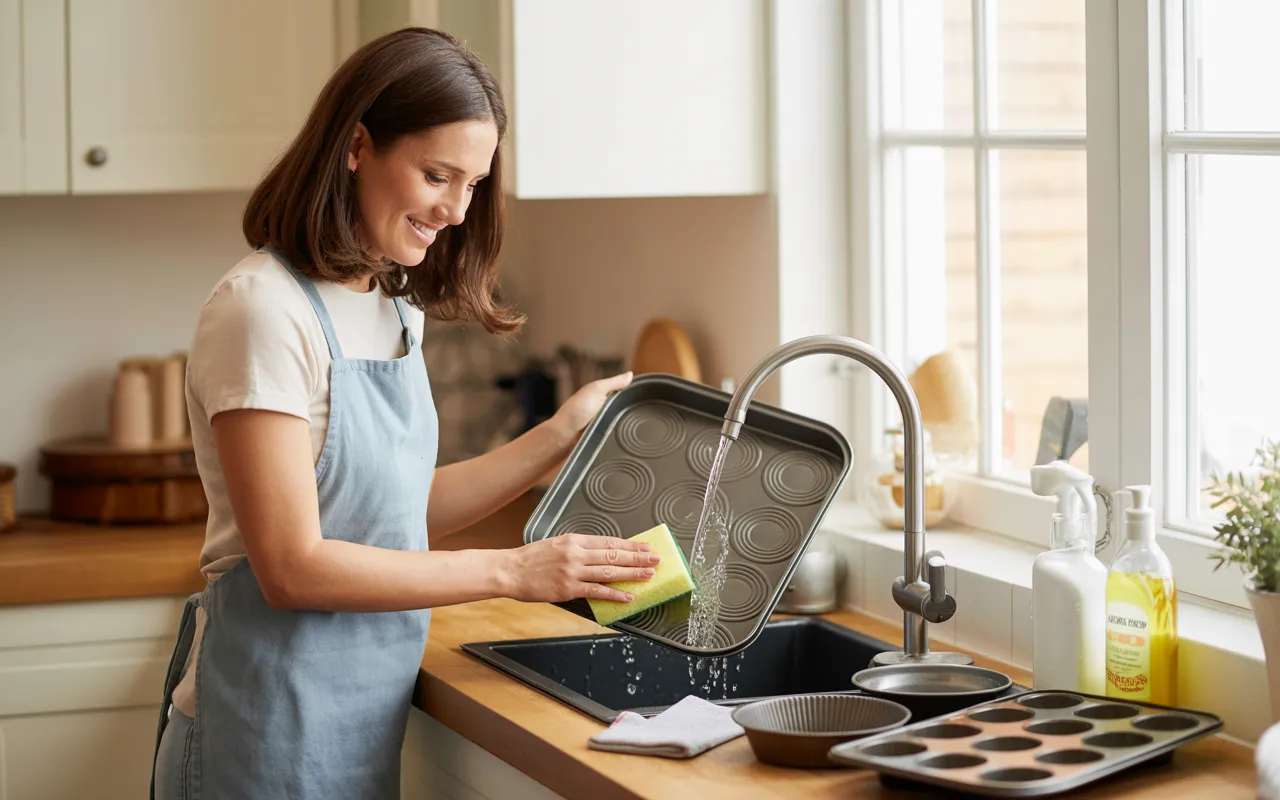
Learn clear, safe steps on How To Clean Nonstick Bakeware so food does not stick, coating stays smooth, and your pans last longer with simple daily care.
Nonstick bakeware makes baking calm and fun. Cookies slide off. Cakes lift with ease. Cleanup feels light. Still, many people ruin these pans by cleaning them the wrong way. Harsh soap, rough pads, and heat can harm the coating. This guide shares real life tips from home cooks and bakers who use these pans each week. You will learn How To Clean Nonstick Bakeware with care, simple tools, and habits that fit daily life. The goal is to keep food safe, pans smooth, and your baking joy strong.
“Good tools last longer when we treat them with care, not force.”
Anna Lopez, Home Baking Coach
Why Nonstick Bakeware Needs Special Care
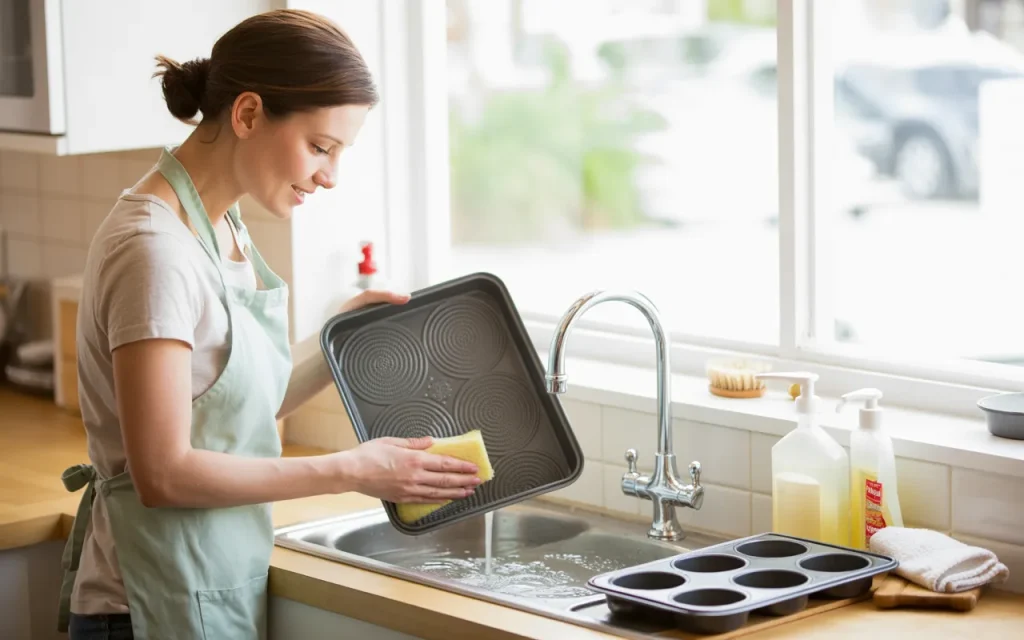
Nonstick pans have a thin coat. This coat helps food release with less oil. It also makes cleanup fast. The coat can scratch or fade if you scrub hard or use harsh soap. Heat and sharp tools also hurt it. Once the coat breaks, food sticks again. Some flakes can mix with food. That is why gentle care matters.
Many brands say their pans are tough. Still, daily habits shape how long they last. A soft touch keeps the surface smooth. Mild soap keeps the coat safe. Cool water helps avoid warping. These steps are small, yet they help a lot over time.
What Happens If You Clean Them the Wrong Way
Poor cleaning leads to dull spots. Food burns faster. The pan may warp. The coat may peel. At that point, baking feels hard again. You may waste time and money on new pans. Bad cleaning also risks health. Loose bits from old coating can mix with food. That risk grows if you scrape with metal or steel pads. Safe care helps avoid this issue.
Tools You Should Use for Safe Cleaning
Before cleaning, gather the right tools. Soft items work best. Avoid rough gear.
Basic Cleaning Tools
| Tool | Why It Helps |
|---|---|
| Soft sponge | Lifts food without scratching |
| Mild dish soap | Cleans grease, keeps coat safe |
| Warm water | Loosens baked food |
| Soft cloth | Dries pan without marks |
These tools keep the pan smooth and clean.
How To Clean Nonstick Bakeware After Daily Use
Daily care keeps pans fresh. Clean soon after use. Let the pan cool first. Hot pans in cold water can warp.
Here is a simple daily method that many home bakers trust for How To Clean Nonstick Bakeware without stress.
- Let the pan cool on the counter.
- Rinse with warm water.
- Add one drop of mild soap.
- Wipe with a soft sponge.
- Rinse well.
- Dry with a soft cloth.
This takes less than two minutes. It stops grease build up.
Handling Stuck Food Without Damage
Sometimes sugar or cheese sticks. Do not scrub hard. That hurts the coat.
Gentle Soak Method
Fill the pan with warm water. Add a small drop of soap. Let it sit for ten minutes. Food will soften. Wipe gently with a sponge.
This step helps a lot with baked sugar or cheese. It keeps the surface safe. Many people use this step as part of How To Clean Nonstick Bakeware after heavy baking days.
“Patience is the best cleaner for nonstick pans.”
Mark Jensen, Kitchen Care Writer
Natural Cleaning Options for Deep Care
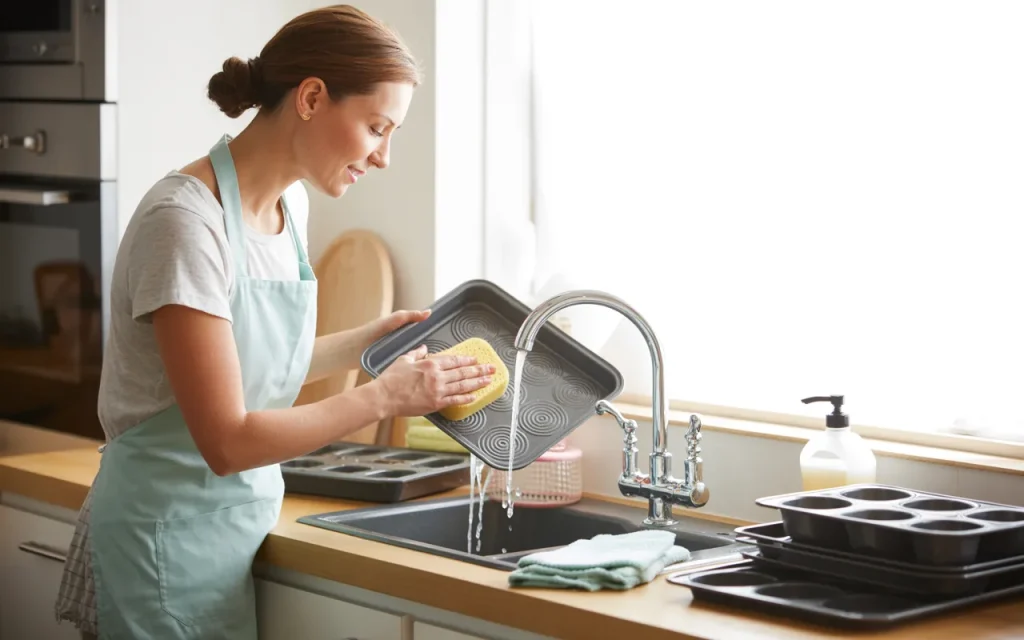
Some stains stay even after soap. Natural items can help.
Baking Soda Paste
Mix baking soda with a bit of water. Make a soft paste. Spread it on stains. Let it sit for fifteen minutes. Wipe gently with a sponge. Rinse and dry.
This works well for dull spots. It keeps the pan safe.
Vinegar Rinse
Add warm water to the pan. Pour in two spoons of white vinegar. Let it sit for five minutes. Rinse well.
This step helps remove grease film. It is safe if done once in a while.
Can You Use the Dishwasher
Many pans say dishwasher safe. Still, heat and strong soap can wear the coat faster. Hand washing is safer.
People who want pans to last long often skip the dishwasher. They choose gentle hand wash as the best part of How To Clean Nonstick Bakeware.
Dishwasher Pros and Cons
| Method | Effect on Pan |
|---|---|
| Hand wash | Keeps coating smooth |
| Dishwasher | May fade coating faster |
Drying and Storing Nonstick Bakeware
Dry pans fully before storing. Water spots can leave marks. Use a soft towel.
Store pans with space. If you stack them, place a soft cloth or paper towel between each pan. This stops scratches.
Mistakes to Avoid While Cleaning
Many people harm pans without knowing. Avoid these habits.
- Do not use steel pads.
- Do not scrape with metal tools.
- Do not soak for hours.
- Do not clean while pan is hot.
- Do not use oven cleaner.
These steps help keep How To Clean Nonstick Bakeware safe and simple.
How Often Should You Deep Clean
Daily wash is enough for most use. Deep clean once a month if you bake often. If you bake rarely, once every two months is fine.
Deep care keeps the surface smooth. It also keeps food from sticking again.
Signs That a Pan Needs Replacement
Even with care, pans do not last forever. Watch for these signs.
- Peeling coat
- Deep scratches
- Food sticks often
- Dark spots that do not fade
At this stage, replace the pan. Safety matters more than cost.
“A worn pan costs more in stress than a new one costs in cash.”
Linda Moore, Home Cooking Teacher
Safety Tips While Cleaning
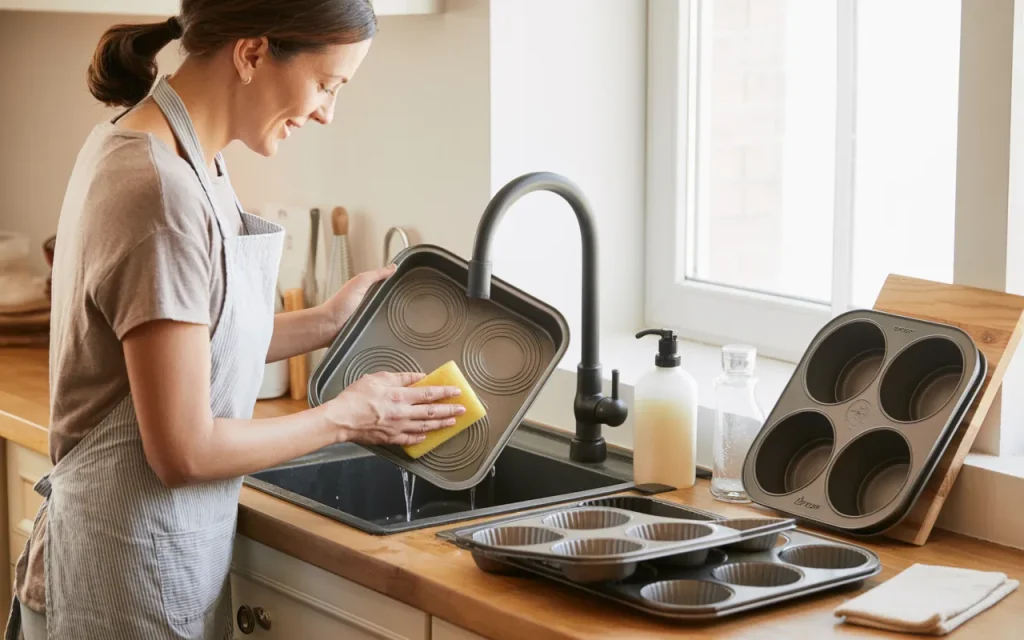
Always use mild soap. Avoid strong fumes. Rinse well so no soap stays on the pan. Dry fully before storing.
These steps keep food taste clean. They also keep hands safe.
Frequently Asked Questions
Can I use baking soda often
Yes, but not daily. Once a month is enough. It helps stains but too much use may dull the coat. Use it as part of How To Clean Nonstick Bakeware only when needed.
Is it safe to scrub hard if food is burned
No. Hard scrubbing can scratch the coat. Always soak first. Patience saves the pan.
Can I clean nonstick bakeware with lemon
Yes. Lemon juice mixed with warm water helps with smell. Rinse well after use.
Should I oil the pan after washing
A light wipe of oil can help if food starts to stick. Do not add too much. Wipe off extra oil.
Can I use paper towels to scrub
Paper towels can be rough. Use them only for drying, not scrubbing.
Simple Routine for Long Lasting Pans
Build a habit. Clean soon. Use soft tools. Store with care. These steps take little time. They save money and stress.
Many home bakers find joy in clean tools. A smooth pan makes baking calm.
Conclusion
Clean pans lead to better baking. Gentle care keeps the coat smooth. Soft tools and mild soap are enough. Avoid heat shock and rough pads. These habits keep pans safe and food clean. Follow this guide on How To Clean Nonstick Bakeware and your pans will serve you well for years. Baking should feel easy, calm, and fun.
Related posts
 Which kitchen tools are essential for cooking
If you are wondering Which kitchen tools are essential for cooking , the answer includes nonstick pans, silicone utensils, stainless steel bowls, and dishwasher safe cookware…
 How to Choose the Right Vegetable Chopper
If you are wondering How to Choose the Right Vegetable Chopper, this guide explains blade types, size, material, safety features, and cleaning ease so you can…
 Best Portable Dishwasher 2026
Looking for the Best Portable Dishwasher 2026? This detailed guide reviews top models, features, pros and cons, pricing, and expert tips to help you choose the…