
How to clean silicone kitchen tools
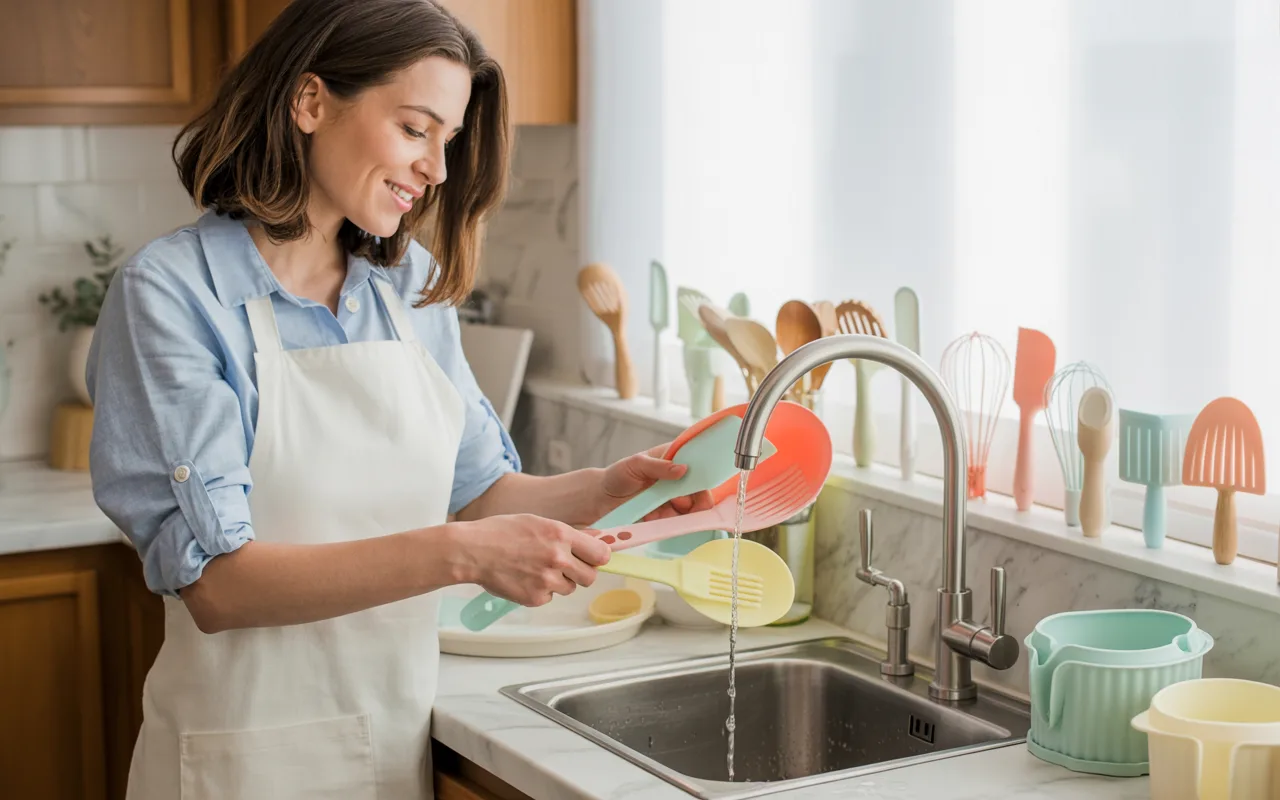
Learn how to clean silicone kitchen tools with simple, safe, and proven methods that remove grease, odor, and stains while keeping your tools fresh and food safe.
Silicone kitchen tools are loved for good reasons. They are flexible, heat safe, light to hold, and gentle on cookware. From spatulas and baking mats to muffin cups and lids, silicone is now part of many kitchens. Yet many people feel confused after a few weeks of use. The tools look clean, but they feel greasy. Some hold strange smells, while others turn dull or sticky.
This guide is written to help real people solve real kitchen problems. I have used silicone tools for years and faced the same issues. Grease film, soap taste, and stubborn smells can make you want to throw them away. That is not needed. With the right care, these tools can last for years.
In this article, you will learn How to clean silicone kitchen tools in clear and simple steps. The advice here is based on hands on use, kitchen science, and safety facts. The goal is to keep your tools clean, fresh, and safe for daily cooking.
“Silicone is safe and long lasting, but it needs the right care to stay that way.”
Sarah Collins, Home Cooking Writer
Why Silicone Tools Need Special Care
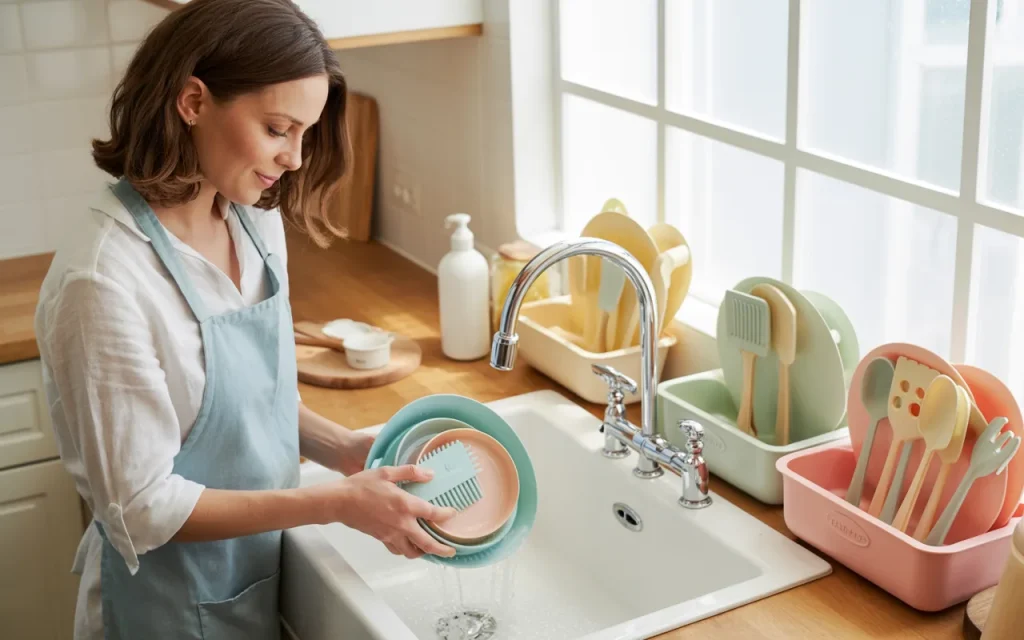
Silicone looks smooth, but it is slightly porous. This means it can hold onto oils and soap residue. Over time, grease sticks to the surface and traps smells. Dish soap alone often fails because soap can leave its own film behind. Heat, spices, and strong oils also add to the problem. Curry, garlic, and frying oils are common causes. Without proper cleaning, silicone can feel slippery even after washing. Another issue is dishwasher use. High heat can bake grease into silicone. This makes tools smell worse instead of cleaner.
Knowing these facts helps you clean silicone the right way and avoid common mistakes.
Common Silicone Kitchen Tools That Need Cleaning
Silicone is used in many items. Each one needs care, but the cleaning steps stay similar.
Everyday Silicone Items
| Tool Type | Common Issues |
|---|---|
| Spatulas | Grease film, oil smell |
| Baking mats | Burnt food stains |
| Muffin cups | Sweet or egg smell |
| Lids | Soap taste |
| Tongs | Sticky surface |
These tools touch heat and food often. Regular care keeps them safe.
Basic Daily Cleaning Method
Daily cleaning stops buildup before it starts. This simple method works for light grease and fresh food residue.
Step by Step Daily Wash
- Rinse the tool with hot water.
- Use a grease cutting dish soap.
- Scrub with a soft sponge.
- Rinse again with very hot water.
- Air dry fully.
This method works best if done right after use. Letting tools sit makes grease harder to remove.
This is the first step in How to clean silicone kitchen tools without damage.
Deep Cleaning for Grease and Odor
If your tools still smell or feel oily, deep cleaning is needed. This method removes trapped grease.
Baking Soda Soak Method
| Item | Amount |
|---|---|
| Hot water | Enough to cover tools |
| Baking soda | 2 tablespoons |
| Soaking time | 30 to 60 minutes |
Mix baking soda with hot water. Soak the tools fully. After soaking, scrub gently and rinse well.
Baking soda breaks down grease and absorbs odor. This method is safe and effective.
“Baking soda works because it binds with oils and lifts them away.”
Dr. Alan Moore, Food Safety Educator
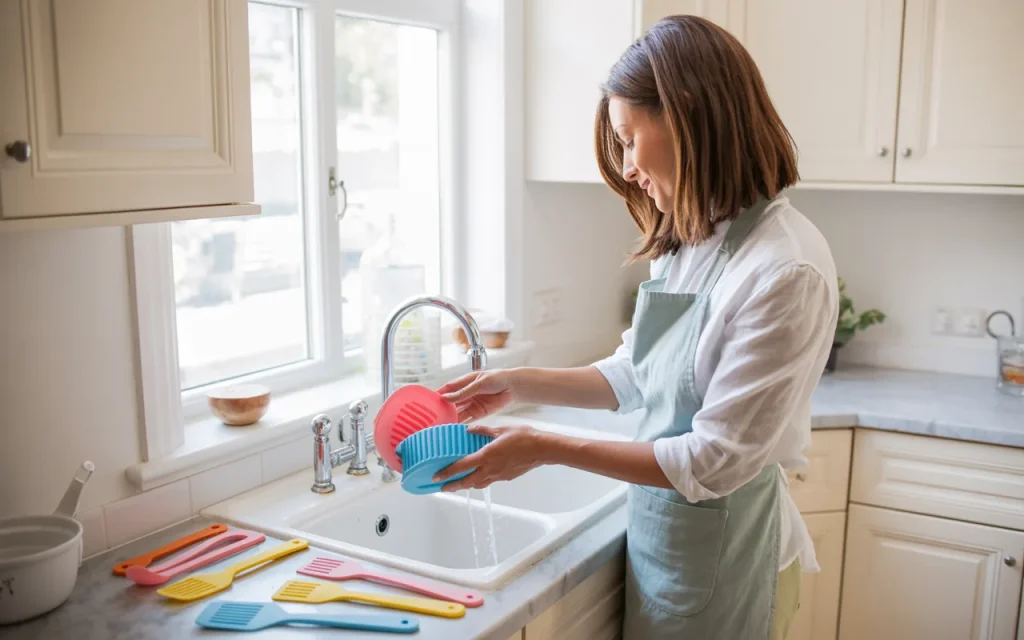
This deep clean step is key in How to clean silicone kitchen tools that feel sticky.
Vinegar Rinse for Strong Smells
Some smells need extra help. Vinegar is great for this job.
Vinegar Rinse Steps
- Mix equal parts vinegar and hot water.
- Soak tools for 15 minutes.
- Rinse with hot water.
- Air dry.
Vinegar removes soap residue and neutralizes odors. The vinegar smell fades as it dries.
Use this method once a month or after cooking strong foods.
Heat Treatment to Remove Oil Film
Heat can help remove oil when used the right way. This step works well for baking mats and spatulas.
Oven Heat Method
- Preheat oven to 350 F.
- Place clean, dry silicone tools on a tray.
- Heat for 10 minutes.
- Remove and cool fully.
- Wash again with dish soap.
Heat pulls oil out of silicone. Washing after removes the released grease.
This step is advanced but helpful in How to clean silicone kitchen tools with long term buildup.
Dishwasher Use Facts
Many silicone tools say dishwasher safe. This is true, but not always best.
Dishwasher Pros and Cons
| Pros | Cons |
|---|---|
| Easy cleaning | Can trap grease |
| Saves time | Soap film buildup |
| Hot water | Heat bakes oil |
If you use a dishwasher, place tools on the top rack. Avoid heavy soap pods. Run an extra rinse cycle if possible.
Hand washing remains the better choice for long term care.
What to Avoid When Cleaning Silicone
Some habits harm silicone or make smells worse.
Things to Skip
- Harsh scrubbers
- Strong chemical cleaners
- Dryer sheets
- Long dishwasher cycles
- Scented soaps
These can damage the surface or leave residue. Simple tools and gentle products work best.
Avoiding mistakes is part of How to clean silicone kitchen tools properly.
How Often Should You Clean Silicone Tools
Cleaning frequency depends on use.
Cleaning Schedule Guide
- Daily use tools: Wash after every use
- Baking mats: Deep clean monthly
- Storage lids: Weekly wash
- Spatulas for oil: Deep clean biweekly
Regular care prevents buildup and saves time later.
Safe Storage Tips
Clean tools need proper storage to stay fresh.
Store silicone tools fully dry. Avoid stacking them while damp. Keep them away from strong smells like spices or cleaning products.
Open air storage helps prevent odor return.
Are Silicone Tools Safe After Deep Cleaning
Yes, silicone remains food safe if cleaned correctly. Baking soda, vinegar, and heat are safe methods. Avoid bleach or harsh chemicals.
Food grade silicone is stable and does not break down with proper care.
This is reassuring for anyone learning How to clean silicone kitchen tools safely.
“Clean silicone tools are as safe as new ones when cared for well.”
Linda Perez, Kitchen Product Tester

Eco Friendly Cleaning Options
Silicone tools are reusable and eco friendly. Cleaning them the right way supports a low waste kitchen.
Use natural cleaners like baking soda and vinegar. Avoid disposable wipes. Air dry instead of using paper towels.
These small habits help the planet and your kitchen.
Frequently Asked Questions
Why do silicone tools feel greasy after washing
Silicone traps oil in tiny pores. Soap alone may not remove it. Deep cleaning helps.
Can I boil silicone tools
Yes. Boiling for 10 minutes can remove grease and odor. Wash after boiling.
Why do silicone tools smell like soap
Soap residue sticks to silicone. Rinse with vinegar and hot water to fix this.
Is baking soda safe for silicone
Yes. Baking soda is gentle and effective for grease and odor removal.
Can silicone tools go in the oven
Most can handle oven heat. Check the label. Use heat only for cleaning, not storage.
Conclusion
Silicone kitchen tools make cooking easier, but they need the right care. Grease, odor, and soap film are common issues, yet they are easy to fix. With simple methods like baking soda soaks, vinegar rinses, and gentle heat, your tools can stay clean and fresh. This guide shared real solutions based on daily kitchen use. By following these steps, you protect your tools and your food. Now you know How to clean silicone kitchen tools in a safe, simple, and effective way.
Related posts
 Which kitchen tools are essential for cooking
If you are wondering Which kitchen tools are essential for cooking , the answer includes nonstick pans, silicone utensils, stainless steel bowls, and dishwasher safe cookware…
 How to Choose the Right Vegetable Chopper
If you are wondering How to Choose the Right Vegetable Chopper, this guide explains blade types, size, material, safety features, and cleaning ease so you can…
 Best Portable Dishwasher 2026
Looking for the Best Portable Dishwasher 2026? This detailed guide reviews top models, features, pros and cons, pricing, and expert tips to help you choose the…