
How To Clean A Food Processor Easily at Home
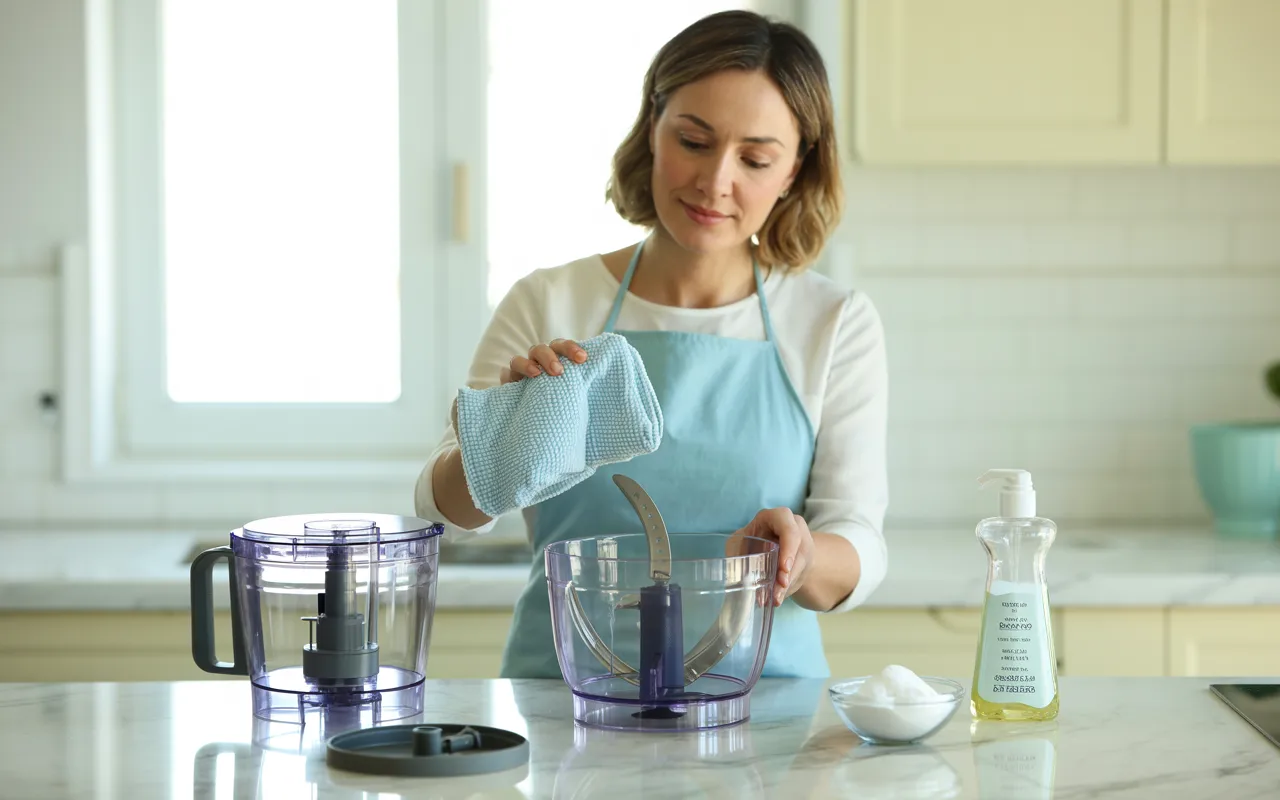
Learn how to clean a food processor step by step with safe, simple methods. How To Clean A Food Processor properly to remove odors, stains, and germs while protecting blades and bowls for long-term use.
A food processor saves time, helps with meal prep, and makes cooking easier. But after chopping onions, grinding nuts, or blending sauces, cleaning it can feel like a chore. Many people leave it soaking or rinse it poorly, which can cause smells, stains, or even damage over time. This guide is written to help you feel confident and relaxed about cleaning your appliance the right way.
I have used food processors for years in home kitchens and small cooking classes. I learned early that poor cleaning shortens the life of the machine and affects food taste. This article explains How To Clean A Food Processor using simple steps, safe tools, and habits that work for daily use. The language is easy, the steps are clear, and the advice comes from real kitchen experience.
You do not need special cleaners or fancy tools. Warm water, mild soap, and a little care go a long way. Let us walk through the process together so your food processor stays fresh, safe, and ready for your next recipe.
“A clean kitchen tool makes cooking calmer and food taste better.”
Sarah Lewis, Home Cooking Instructor
Why Proper Cleaning Matters
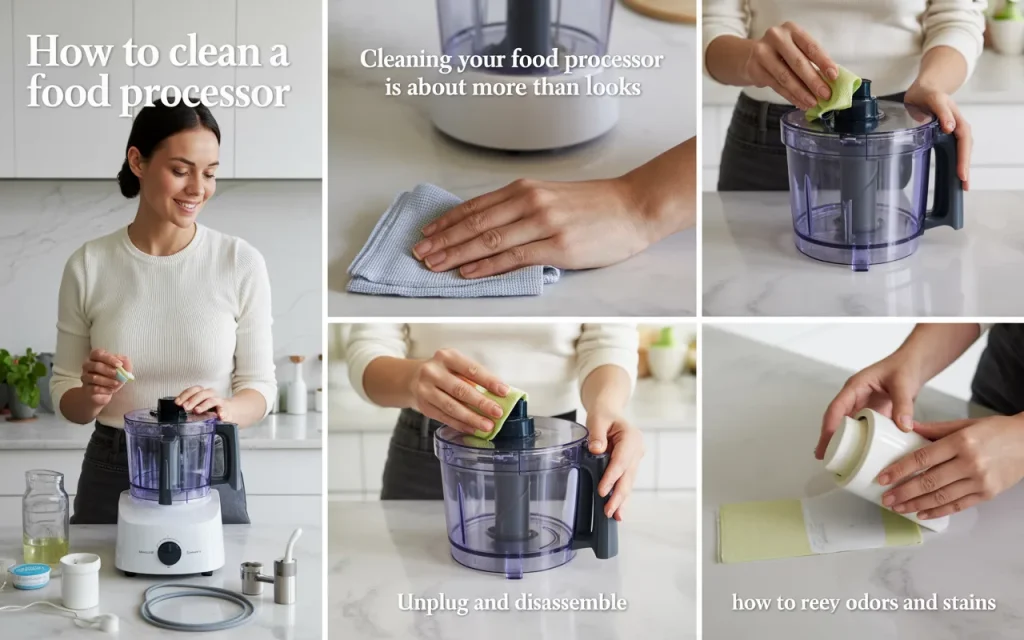
Cleaning your food processor is about more than looks. Food bits stuck under blades or seals can grow bacteria. Old smells can pass into new recipes. Dried food can dull blades and strain the motor.
A clean appliance also helps you spot cracks, loose parts, or worn seals early. This protects your investment and keeps food safe. Many people ask How To Clean A Food Processor after noticing odors or cloudy bowls. Regular cleaning avoids these issues before they start.
Another benefit is ease. When you clean right after use, food comes off quickly. Waiting too long makes cleaning harder and slower.
Parts of a Food Processor You Need to Clean
Before cleaning, it helps to know the main parts. Most food processors share similar components.
Main Components
| Part | Purpose | Cleaning Need |
|---|---|---|
| Bowl | Holds food | Wash after every use |
| Lid | Prevents spills | Clean seals and corners |
| Blades | Chop and slice | Handle with care |
| Base | Holds motor | Wipe only |
Never put the motor base in water. This is a common mistake that can ruin the unit.
How To Clean A Food Processor Step by Step
This section gives you a clear process you can follow every time. These steps are safe for most brands.
Unplug and Disassemble
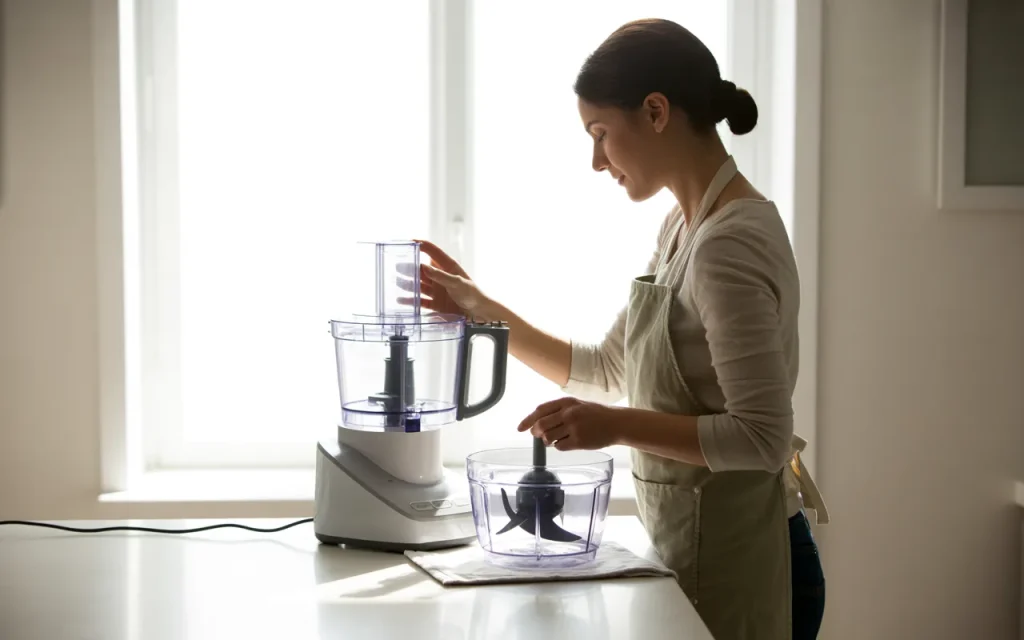
Always unplug the unit first. Remove the bowl, lid, blades, and discs. Keep sharp parts separate so you do not cut your hands.
Rinse Right Away
Rinse removable parts under warm water. This removes loose food and stops it from drying. This small step saves a lot of effort later.
Wash with Mild Soap
Use a soft sponge and mild dish soap. Clean each part well, paying attention to grooves and seals. This is a key part of How To Clean A Food Processor without damage.
Handle Blades Safely
Hold blades by the center hub, not the edge. Wash slowly and never drop them into soapy water where you cannot see them.
Dry Fully
Air dry parts on a clean towel. Make sure everything is dry before reassembling. Moisture trapped inside can cause smells.
Quick Cleaning for Light Use
Sometimes you only chop herbs or soft fruits. A full wash may feel like too much. Here is a fast method for light use.
The Soap and Water Method
- Add warm water and a drop of soap to the bowl.
- Attach the blade and lid.
- Pulse for five to ten seconds.
- Rinse and dry.
This method supports How To Clean A Food Processor quickly when food is not greasy or sticky. Still do a full wash after heavy tasks.
How to Remove Odors and Stains
Strong foods like garlic, onions, and spices can leave smells. Plastic bowls can also stain over time.
Natural Odor Removal Options
| Ingredient | Use | Result |
|---|---|---|
| Baking soda | Soak bowl | Removes smells |
| Lemon juice | Rub or soak | Fresh scent |
| Vinegar | Short soak | Cuts grease |
Soak the bowl for ten to fifteen minutes, then wash as usual. Avoid harsh cleaners since they can scratch plastic.
“Gentle cleaning keeps tools safe and food pure.”
Mark Evans, Kitchen Safety Writer
Dishwasher Use and Safety
Many food processor parts are labeled dishwasher safe. Still, hand washing is often better.
Pros and Cons
Dishwashers use high heat that can cloud plastic and dull blades over time. If you use the dishwasher, place parts on the top rack and avoid heated dry cycles.
For daily care, hand washing remains the safest way to follow How To Clean A Food Processor while protecting each part.
Cleaning the Motor Base Correctly
The motor base should never be submerged. Cleaning it is simple but important.
Safe Base Cleaning Steps
- Unplug the unit.
- Wipe with a damp cloth.
- Dry with a towel.
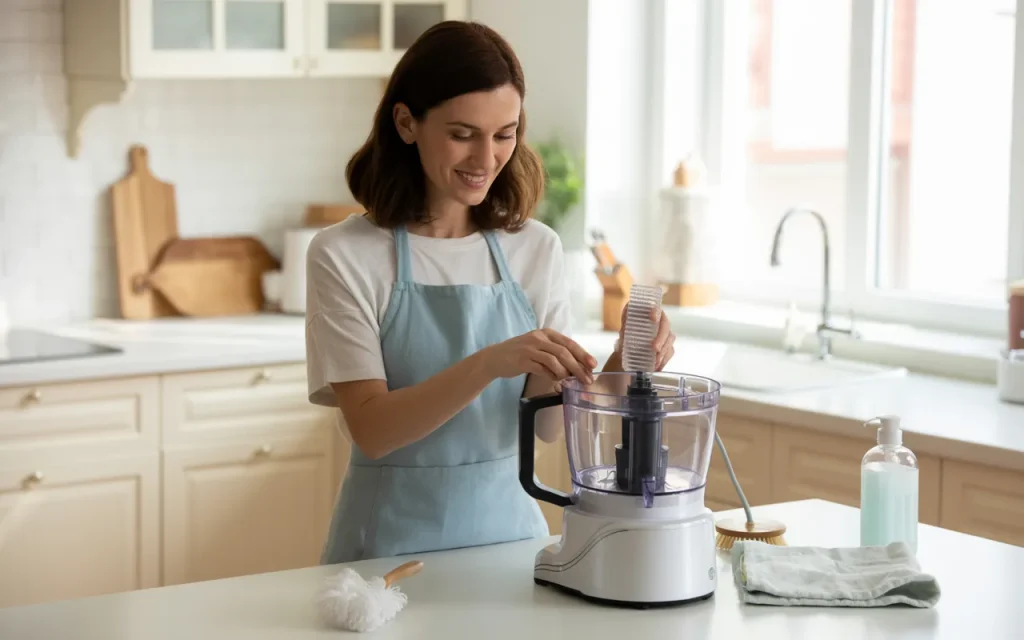
Check the area where the bowl sits. Crumbs can collect there. A soft brush works well for tight spots.
Common Cleaning Mistakes to Avoid
Many issues come from small habits that seem harmless.
Mistakes That Cause Damage
- Soaking blades for long periods
- Using steel scrubbers on plastic
- Washing the base in water
- Leaving parts wet before storage
Avoiding these mistakes helps you follow How To Clean A Food Processor correctly and safely.
How Often Should You Clean a Food Processor
Clean removable parts after every use. Even dry foods leave oils behind. Deep clean once a week if you use it often.
If the unit sits unused, rinse and dry it before storage. This keeps dust and old smells away.
Storage Tips After Cleaning
Proper storage keeps your processor ready to use.
Smart Storage Ideas
- Store blades in a container or sleeve
- Keep the bowl dry and uncovered
- Do not stack heavy items inside
Good storage supports long term care and makes How To Clean A Food Processor easier each time.
“Care for your tools and they care for your meals.”
Linda Moore, Home Kitchen Coach
Frequently Asked Questions
Can I wash food processor blades in the dishwasher?
Yes, if the manual allows it. Hand washing keeps blades sharper for longer.
What is the safest way to clean sharp blades?
Hold them by the center hub and wash slowly with a sponge.
How do I remove cloudy film from the bowl?
Soak the bowl in warm water and vinegar, then rinse well.
Is it safe to use bleach?
No. Bleach can damage plastic and leave harmful residue.
Why does my food processor smell bad?
Old food bits and moisture cause smells. Regular cleaning solves this.
Conclusion
Cleaning a food processor does not need to feel stressful or time consuming. With simple steps, gentle tools, and a regular routine, you can keep your appliance clean and safe for years. This guide shared practical experience and clear advice to answer the common question of How To Clean A Food Processor in a way that fits real kitchens. A clean food processor protects your health, improves food taste, and saves money by extending the life of the machine. Take a few minutes after each use, treat the parts with care, and enjoy cooking with confidence every time.
Related posts
 Which kitchen tools are essential for cooking
If you are wondering Which kitchen tools are essential for cooking , the answer includes nonstick pans, silicone utensils, stainless steel bowls, and dishwasher safe cookware…
 How to Choose the Right Vegetable Chopper
If you are wondering How to Choose the Right Vegetable Chopper, this guide explains blade types, size, material, safety features, and cleaning ease so you can…
 Best Portable Dishwasher 2026
Looking for the Best Portable Dishwasher 2026? This detailed guide reviews top models, features, pros and cons, pricing, and expert tips to help you choose the…