
Beginner Friendly Electrical Repairs Made Simple at Home
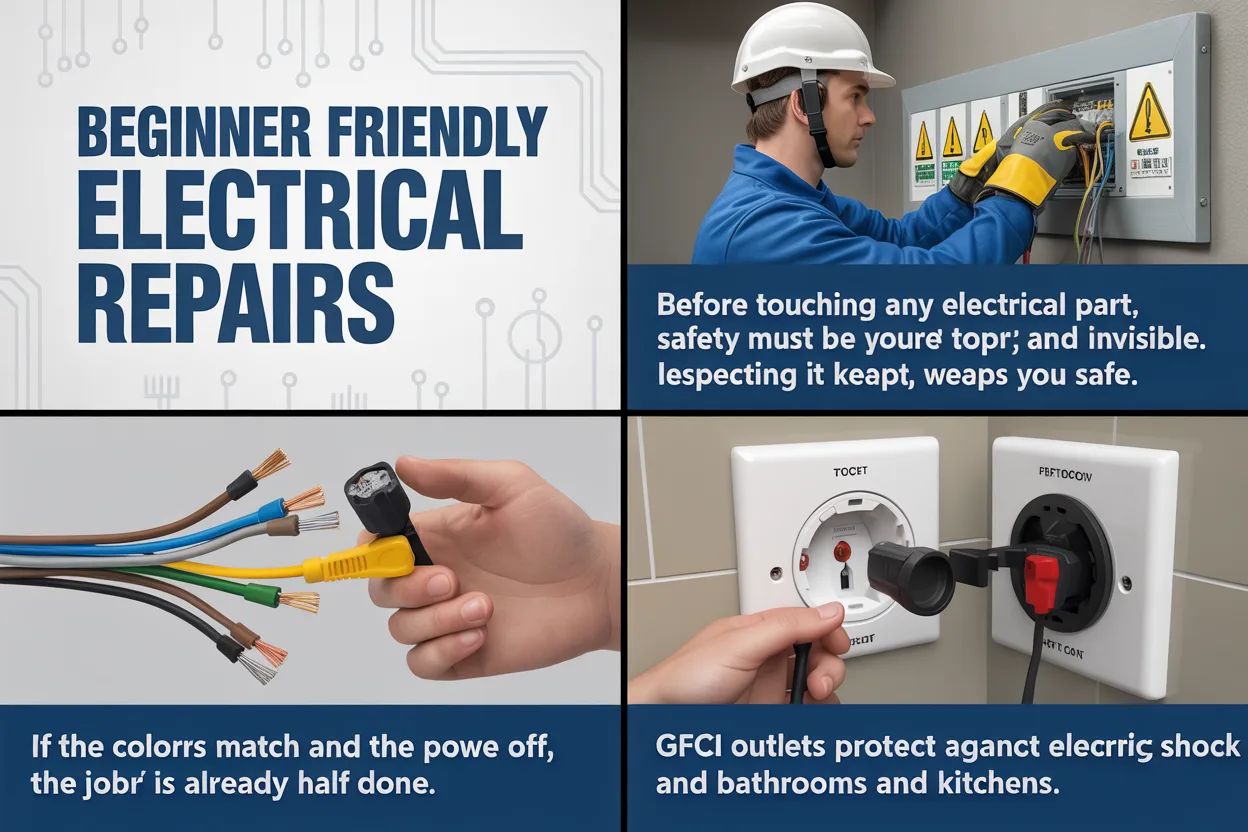
For anyone curious about beginner friendly electrical repairs, this guide gives clear answers, simple steps, safety basics, and real examples to help you fix small home electrical issues with confidence and care.
Electrical problems at home can feel stressful at first. A light stops working. A switch feels loose. An outlet does not give power. Many people think these small issues always need a professional. In reality, there are several beginner friendly electrical repairs that can be done safely with the right guidance, patience, and respect for safety rules.
This article is written for everyday people. You do not need a technical background. You do not need expensive tools. You just need clear steps, calm thinking, and a focus on safety. I will explain things in plain English, using real life examples and practical advice that comes from experience, not theory.
You will learn what tasks are safe for beginners, what tools you need, what mistakes to avoid, and when to stop and call an electrician. The goal is not to turn you into an expert, but to help you feel confident with small repairs that many homeowners face.
What Are Beginner Friendly Electrical Repairs?
Beginner friendly electrical repairs are small electrical tasks that can be done safely by someone with no formal training. These repairs do not involve complex wiring systems, heavy electrical loads, or changes to the main power supply. They focus on simple fixes inside the home, often related to outlets, switches, lights, and cords.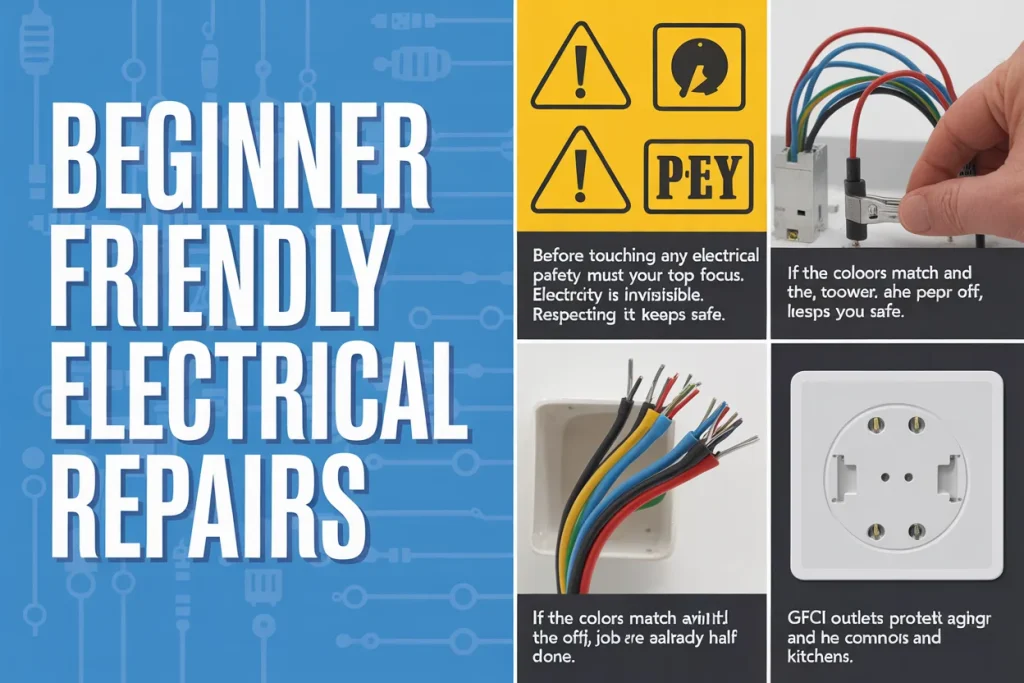
Common Characteristics
These repairs usually share a few clear traits.
-
Low voltage or standard household voltage
-
Limited number of wires
-
Easy access without opening walls
-
Clear visual signs of the problem
-
Minimal risk when power is turned off
Examples of Safe Starter Repairs
Here are some examples that fit well under beginner friendly electrical repairs.
-
Replacing a wall switch
-
Changing a damaged outlet
-
Fixing a loose light fixture
-
Installing a ceiling light
-
Replacing a broken plug
-
Resetting and replacing a GFCI outlet
These tasks are common in homes across cities, suburbs, and rural areas. They apply to apartments, houses, and small offices.
Safety Comes First Every Single Time
Before touching any electrical part, safety must be your top focus. Electricity is silent and invisible. Respecting it keeps you safe.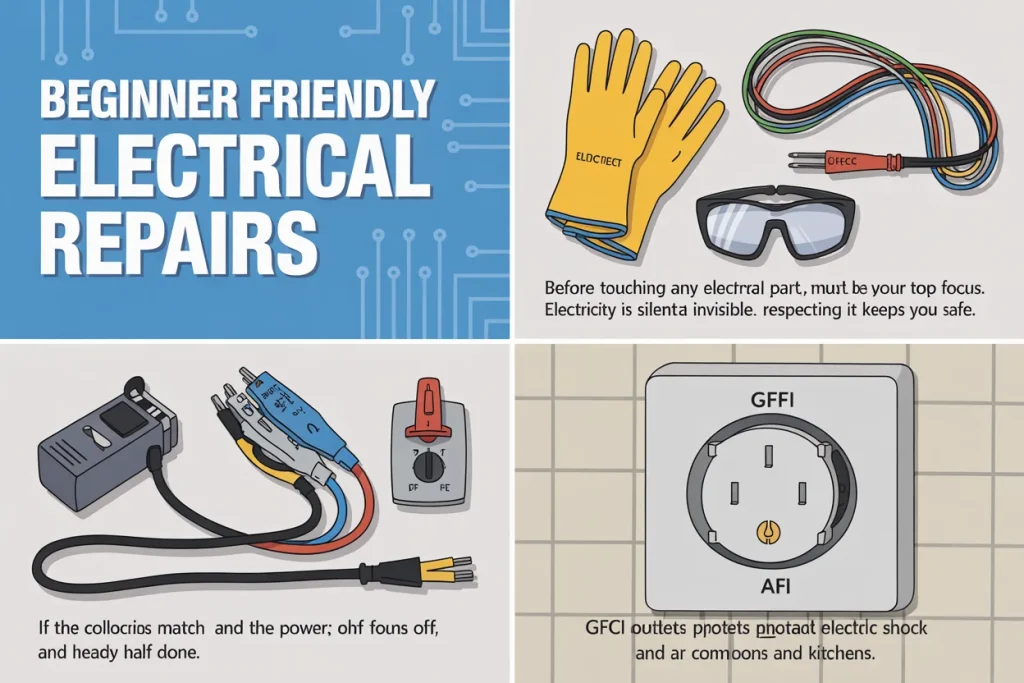
Basic Safety Rules for Beginners
Follow these rules without exception.
-
Turn off power at the breaker box
-
Use a voltage tester before touching wires
-
Work in dry conditions
-
Use insulated tools
-
Never rush
“The safest repair is the one you prepare for before you start.”
Alex Morgan, Home Safety Educator
Understanding Your Circuit Breaker
Your circuit breaker controls power to different parts of your home. Each switch is labeled for a room or area.
Before starting any repair, turn off the breaker connected to that area. Then test the outlet or switch to confirm there is no power.
Simple Circuit Breaker Table
| Breaker Label | Area Covered | Beginner Safe |
|---|---|---|
| Living Room | Lights and outlets | Yes |
| Bedroom | Lights and outlets | Yes |
| Kitchen | Small appliances | Caution |
| Main Breaker | Entire home | No |
This table helps beginners know where to start and what to avoid.
Tools You Need for Simple Electrical Repairs
You do not need a large toolbox. A few basic tools are enough for most beginner friendly electrical repairs.
Essential Tools List
Here is what most beginners should have.
-
Flat head screwdriver
-
Phillips screwdriver
-
Voltage tester
-
Wire stripper
-
Needle nose pliers
-
Electrical tape
These tools are affordable and easy to find at local stores in many regions.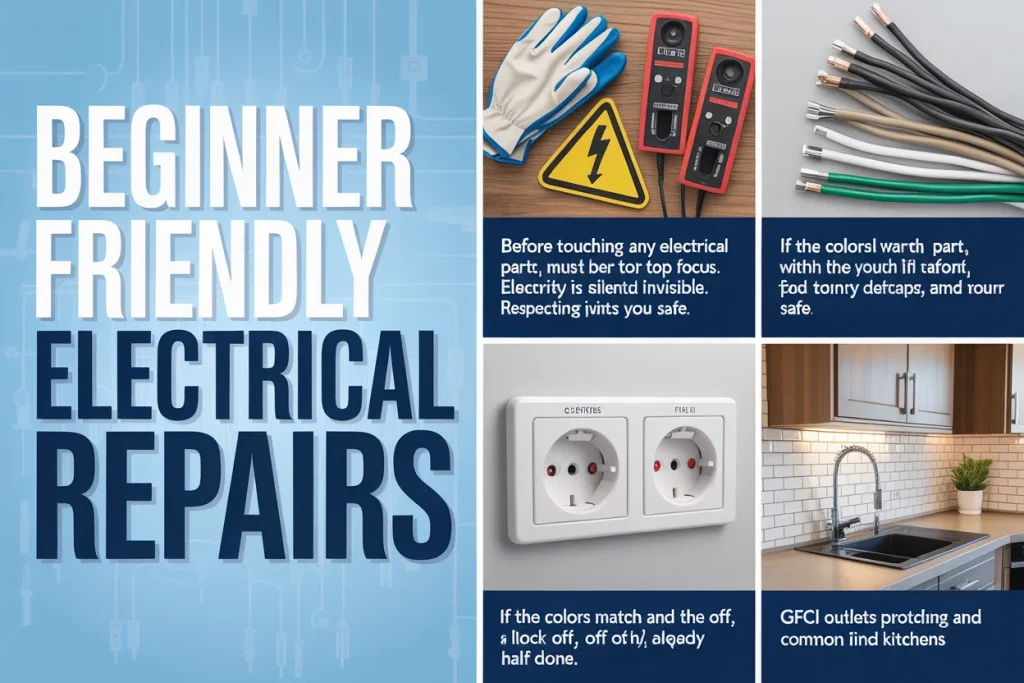
Tool Purpose Table
| Tool Name | Purpose | Beginner Use |
|---|---|---|
| Voltage tester | Check live power | Essential |
| Screwdriver | Remove covers | Essential |
| Wire stripper | Remove wire coating | Occasional |
| Electrical tape | Secure wires | Helpful |
Repair 1: Replacing a Wall Switch
A wall switch can wear out over time. If it feels loose or stops working, replacing it is a good beginner task.
Step by Step Guide
-
Turn off the breaker for that room.
-
Remove the switch cover plate.
-
Unscrew the switch from the wall box.
-
Test wires with a voltage tester.
-
Note wire positions.
-
Remove wires from old switch.
-
Connect wires to the new switch.
-
Secure switch and cover plate.
-
Turn power back on and test.
This process takes about 20 minutes for most beginners.
Common Mistakes to Avoid
-
Forgetting to test for power
-
Mixing up wire positions
-
Overtightening screws
Repair 2: Fixing a Loose Electrical Outlet
A loose outlet can cause plugs to fall out or create sparks. Fixing it improves safety.
Why Outlets Become Loose
Over time, repeated plug use loosens mounting screws. The outlet itself may still be fine.
How to Fix It Safely
-
Turn off power at breaker.
-
Remove outlet cover.
-
Tighten mounting screws.
-
Check wire connections.
-
Reinstall cover.
If the outlet shows burn marks or cracked plastic, replace it instead.
Repair 3: Installing a Light Fixture
Installing a light fixture is one of the most common beginner friendly electrical repairs.
What Makes It Beginner Safe
-
Simple wire colors
-
Clear instructions
-
Lightweight parts
Wire Color Basics
Most fixtures use three wires.
-
Black for live
-
White for neutral
-
Green or bare for ground
Match colors carefully and secure with wire nuts.
“If the colors match and the power is off, the job is already half done.”
Linda Perez, Residential Electrician
Repair 4: Replacing a Damaged Power Cord Plug
A damaged plug can be replaced instead of buying a new appliance.
Signs You Need a New Plug
-
Exposed wires
-
Burn marks
-
Loose prongs
Basic Replacement Steps
-
Unplug the appliance.
-
Cut off old plug.
-
Strip wire ends.
-
Attach wires to new plug terminals.
-
Secure plug housing.
This repair saves money and reduces waste.
Repair 5: Changing a GFCI Outlet
GFCI outlets protect against electric shock and are common in bathrooms and kitchens.
When to Replace One
-
Will not reset
-
Trips without load
-
Shows warning light
Beginner Tips
-
Label wires before removal
-
Follow line and load markings
-
Test after installation
This is a good step forward for those comfortable with basic repairs.
What Repairs Beginners Should Avoid
Not all electrical tasks are safe for beginners.
Tasks to Leave to Professionals
-
Main breaker panel work
-
New circuit installation
-
Heavy appliance wiring
-
Outdoor underground wiring
-
Commercial electrical systems
Stopping at the right time is part of safe learning.
“Knowing when to stop is just as important as knowing how to start.”
Daniel Wright, Building Inspector
Local Rules and Regional Considerations
Electrical codes vary by country, state, and city. Always check local guidelines before doing repairs.
Some areas require permits even for small changes. Others allow homeowners to do basic work.
If you live in rented property, always get owner approval first.
How Beginner Friendly Electrical Repairs Save Time and Money
Doing small repairs yourself offers real benefits.
-
Lower repair costs
-
Faster fixes
-
Better home knowledge
-
Increased confidence
Over time, these skills add value to your home care routine.
Learning Tips for Long Term Confidence
Practice builds comfort. Start with one repair. Read instructions fully. Take photos before removing wires. Work slowly.
Over time, beginner friendly electrical repairs become familiar tasks rather than stressful ones.
Frequently Asked Questions
Are beginner electrical repairs really safe?
Yes, many are safe if power is off and steps are followed carefully.
Do I need special training?
No formal training is required for basic repairs, only clear instructions and safety focus.
How do I know if power is off?
Use a voltage tester on every wire before touching it.
Can I do repairs in an old house?
Yes, but wiring may differ. Work slowly and stop if unsure.
What if something goes wrong?
Turn off power immediately and call a professional.
Conclusion
Beginner friendly electrical repairs help everyday people take care of their homes with confidence. By focusing on safety, using simple tools, and respecting limits, many common electrical issues can be handled without fear.
Related posts
 Which kitchen tools are essential for cooking
If you are wondering Which kitchen tools are essential for cooking , the answer includes nonstick pans, silicone utensils, stainless steel bowls, and dishwasher safe cookware…
 How to Choose the Right Vegetable Chopper
If you are wondering How to Choose the Right Vegetable Chopper, this guide explains blade types, size, material, safety features, and cleaning ease so you can…
 Best Portable Dishwasher 2026
Looking for the Best Portable Dishwasher 2026? This detailed guide reviews top models, features, pros and cons, pricing, and expert tips to help you choose the…