
Beginner’s Guide to Home Improvement: Essential Tips and Steps

A beginner’s guide to home improvement helps you start small and gradually improve your living space. Learn practical tips, tools, and projects with this guide.
Beginner’s Guide to Home Improvement
Home improvement can be both exciting and overwhelming, especially if you are new to it. Whether you want to increase the value of your home, improve its functionality, or simply refresh its look, starting with small, manageable projects is key. In this beginner’s guide to home improvement, we’ll walk you through the basics, from planning your projects to gathering the right tools and executing them effectively. With some patience, creativity, and effort, you can transform your living space into a place that reflects your style and meets your needs.
Why Home Improvement Matters for Beginners
For those new to home improvement, it may seem like a complex task. However, taking the time to enhance your home can be highly rewarding. Not only does home improvement improve the functionality of your home, but it can also increase its aesthetic value, which is beneficial if you decide to sell in the future. The beauty of home improvement is that there’s always room for growth, regardless of your skill level. Starting small and gradually tackling bigger projects will build your confidence and improve your home step by step.
“Home improvement is not just about fixing what is broken; it’s about making a home feel more like a sanctuary.” – Anonymous
Essential Tools Every Beginner Needs
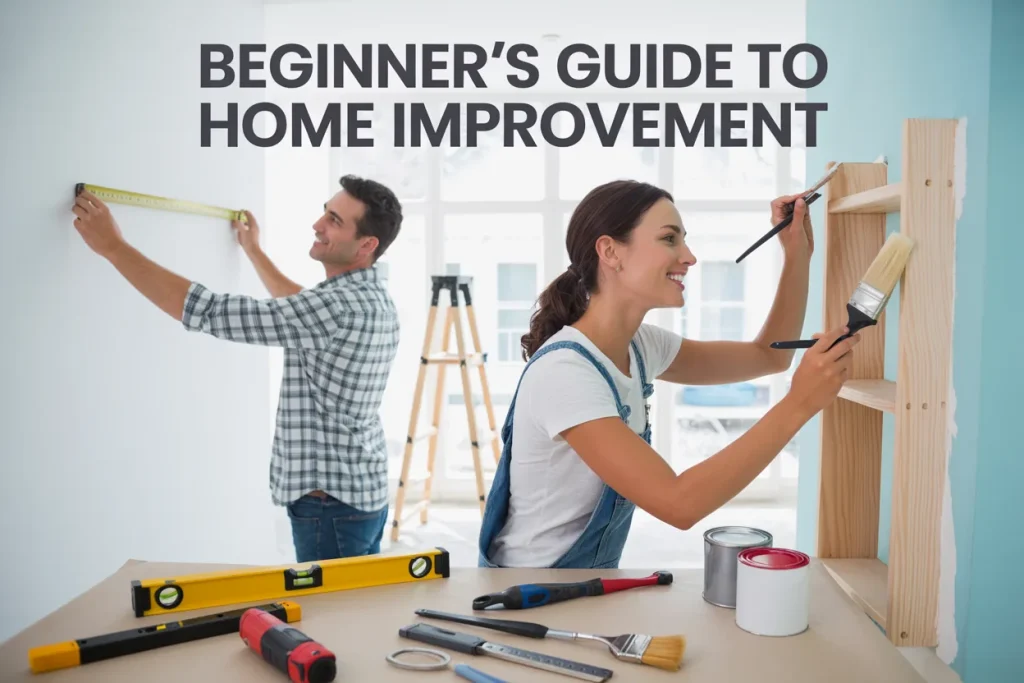
Before jumping into any home improvement projects, it’s crucial to have the right tools at your disposal. Having these tools not only makes tasks easier but also ensures your safety as you work.
| Tool | Purpose |
|---|---|
| Hammer | For driving nails, assembling furniture, and small repairs. |
| Measuring Tape | Helps measure spaces and materials for accurate cuts. |
| Screwdriver Set | Used for tightening screws, vital for furniture assembly. |
| Drill | Ideal for drilling holes, mounting shelves, and other tasks. |
| Level | Ensures that surfaces are perfectly aligned and balanced. |
| Utility Knife | Perfect for cutting various materials like drywall, carpets, and plastics. |
These basic tools will make your first projects easier and safer to execute. As you gain experience, you’ll expand your toolkit based on the complexity of the projects you want to tackle.
Planning Your First Home Improvement Project
Starting with a plan is crucial. Without a clear direction, it’s easy to get overwhelmed or waste time and money on unnecessary tasks. A structured approach helps you stay focused and organized, ensuring successful results.
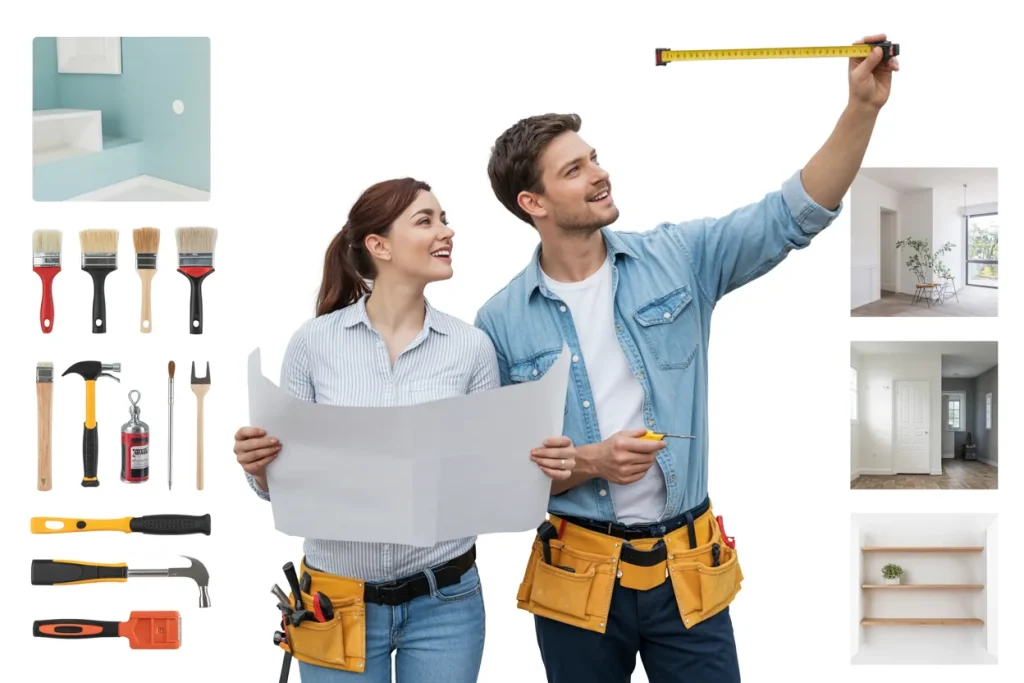
Choosing your project is the first step. As a beginner, it’s best to start small. Simple tasks like painting a room, installing shelves, or updating light fixtures can provide a great learning experience. Setting a budget helps avoid overspending. Factor in costs for materials, tools, and any professional help you may need. Creating a timeline ensures that your project stays on track and doesn’t drag on for too long. Lastly, make sure you gather all necessary materials and tools before starting to prevent interruptions mid-project.
By planning carefully, you ensure your project is both manageable and successful.
Easy Home Improvement Ideas for Beginners
Home improvement projects don’t have to be huge undertakings. There are plenty of simple, beginner-friendly ideas that can significantly enhance the look and feel of your home. Painting a room is one of the easiest and most cost-effective ways to refresh your home. With the right tools and a little patience, you can change the color of a room and completely transform the space.
Adding shelves to your walls can increase storage space and add a stylish touch to any room. You can install floating shelves, corner shelves, or even small units to display books or decorative items. Changing outdated light fixtures to modern designs is an easy way to make your home look more contemporary. Plus, it’s a task most beginners can handle themselves.
Installing a backsplash in the kitchen is another simple yet impactful upgrade. Peel-and-stick tiles are beginner-friendly, making this a great DIY project. Swapping out old cabinet knobs and handles with new, modern hardware can make a big difference in the look of your kitchen or bathroom. These projects don’t require professional skills but can still make a noticeable difference in your home.
Understanding the Budget for Home Improvement
A common mistake that beginners make is not accounting for all costs involved in a home improvement project. It’s easy to underestimate the amount of time and money a project will take, leading to frustration later on.
Here’s how to set a realistic budget for your projects:
Start by calculating the cost of materials. Whether it’s paint, wood, or tile, knowing the prices will help you avoid unexpected costs. If you don’t already own the necessary tools, consider renting them for one-time projects. If you’ll be doing more DIY work in the future, investing in a few key tools can save you money in the long run. If your project requires professional help, get multiple quotes and always ask for a breakdown of the costs. Some professionals charge by the hour, while others charge by the project. Set aside a small contingency fund for unexpected costs that may arise during the project. Proper budgeting keeps your projects on track and ensures they don’t end up costing more than you anticipated.
DIY vs. Hiring a Professional: What’s Best for You?
While many home improvement tasks are beginner-friendly and can be tackled as DIY projects, there are times when hiring a professional is necessary. Here’s how to decide whether to DIY or hire help: DIY projects are great for smaller, simpler tasks. Painting, installing shelves, and upgrading hardware are all things you can typically do yourself. Plus, DIY saves money because you only have to pay for materials and tools.
For larger tasks or those requiring specialized skills, it’s often better to hire a professional. This includes things like electrical work, plumbing, or structural repairs. Attempting these without experience can lead to costly mistakes.
If you’re unsure, consider consulting with a professional first. They can guide you on whether the project is feasible for a beginner.
Beginner-Friendly Home Improvement Mistakes to Avoid
As you begin working on your home improvement projects, keep these common mistakes in mind: Not having a clear plan can lead to frustration and wasted materials. Take the time to plan your project before starting. Incorrect measurements can ruin your project. Always double-check measurements before cutting or purchasing materials. Home improvement can involve heavy lifting, sharp tools, and electrical work. Always prioritize safety by using the right protective gear and following safety guidelines.
Many beginners forget to factor in all costs, including labor and tools. Make sure you budget appropriately to avoid surprises. Using cheap or incompatible materials can lead to poor results. Do your research and choose materials that fit your project’s needs and budget.
By avoiding these mistakes, your home improvement experience will be much smoother and more successful.
Frequently Asked Questions
What is the easiest home improvement project for beginners?
Painting a room or installing a backsplash is often considered one of the easiest projects for beginners. These tasks require minimal tools and skills.
How do I budget for home improvement?
Start by calculating the cost of materials, tools, and labor. Set aside a contingency fund for unexpected expenses and research the costs before beginning your project.
Can I do home improvement without professional help?
Yes, many beginner projects can be done DIY. However, for larger tasks, consider hiring professionals to ensure the job is done correctly and safely.
How long do home improvement projects take?
The length of time varies based on the project’s complexity. Simple tasks like painting may take a day or two, while larger projects may take several weeks.
Do I need to buy a lot of tools for beginner projects?
For many beginner projects, only a basic set of tools is needed. Over time, you can expand your tool collection as you take on more complex tasks.
Conclusion
Home improvement is a rewarding process that allows you to make your home more functional, beautiful, and personalized. For beginners, the key to success is starting small, staying organized, and budgeting effectively. By following this beginner’s guide to home improvement, you’ll be on your way to creating the home you’ve always wanted, one project at a time.
As you gain more experience, you’ll be able to tackle bigger and more complex projects, continually improving your skills and your living space. So, pick your first project, gather your tools, and start improving your home today!
Related posts
 Which kitchen tools are essential for cooking
If you are wondering Which kitchen tools are essential for cooking , the answer includes nonstick pans, silicone utensils, stainless steel bowls, and dishwasher safe cookware…
 How to Choose the Right Vegetable Chopper
If you are wondering How to Choose the Right Vegetable Chopper, this guide explains blade types, size, material, safety features, and cleaning ease so you can…
 Best Portable Dishwasher 2026
Looking for the Best Portable Dishwasher 2026? This detailed guide reviews top models, features, pros and cons, pricing, and expert tips to help you choose the…