
how many amps does a typical power tool use
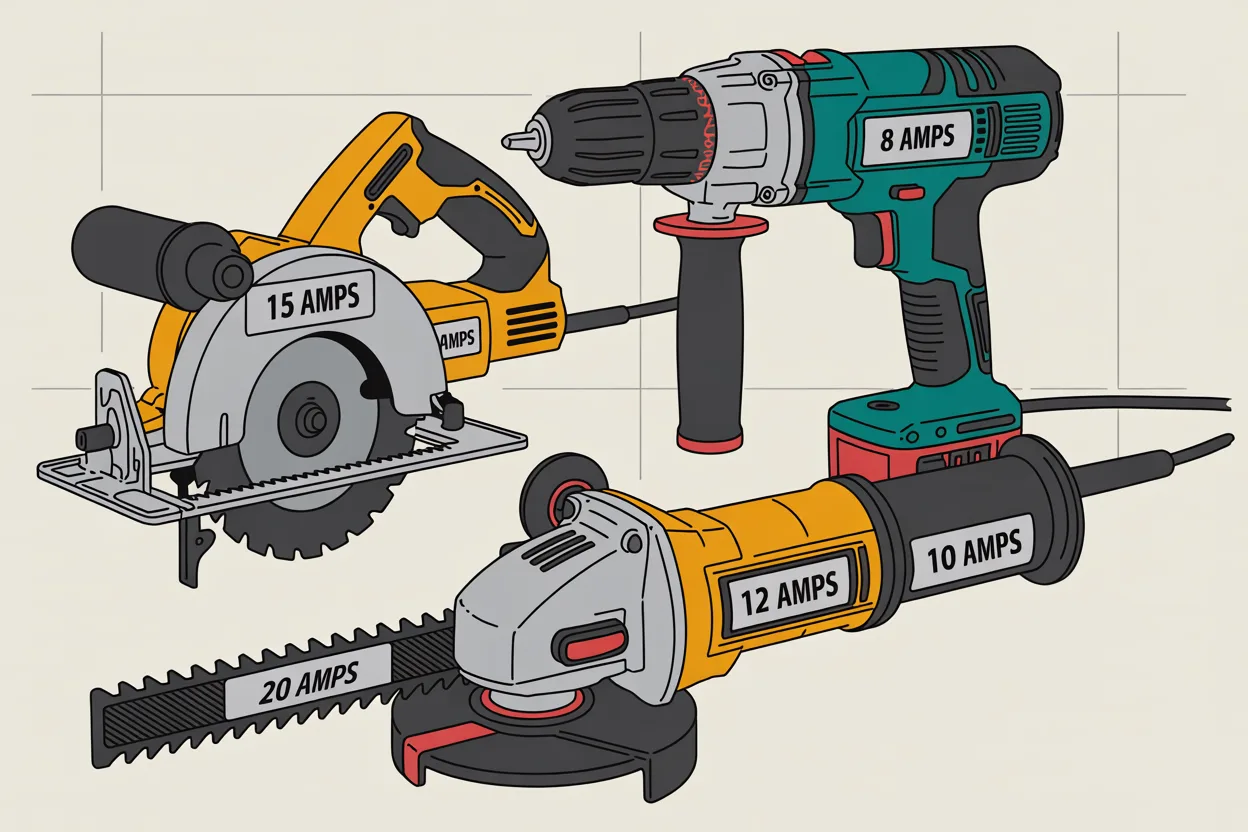
Clear guide on how many amps does a typical power tool use for home and job sites, with simple charts, safety tips, and real examples that help you choose the right outlet and circuit.
People often ask a simple question before buying or using a tool at home or on a site. They want to know how much current it draws and if their outlet can handle it. This guide answers that question in plain words. It explains ratings, shows examples, and shares tips from real use. Amps tell you how much current flows while a tool runs. Too much draw can trip a breaker. Too little can stall the motor. The goal is a safe match. By the end, you will know how many amps does a typical power tool use, how to read labels, and how to plan circuits with ease. This article keeps words short and clear. It uses calm examples and simple math. It follows safety rules and real shop habits. Let us get started.
What Amps Mean in Simple Terms
Amps measure current. Think of current as the amount of flow through a wire. More amps mean more flow. Tools with larger motors need more flow.
Most homes in the US use 120 volts. Some shops use 240 volts. Amps and volts work together. If volts stay the same, higher amps mean higher demand on the circuit.
Labels on tools show an amp rating. That number helps you choose an outlet and breaker size. It also helps you plan shared use on one circuit.
“Clear numbers reduce stress. Read the label and plan once.”
Author: Sam Keller
Typical Amp Ranges by Tool Type
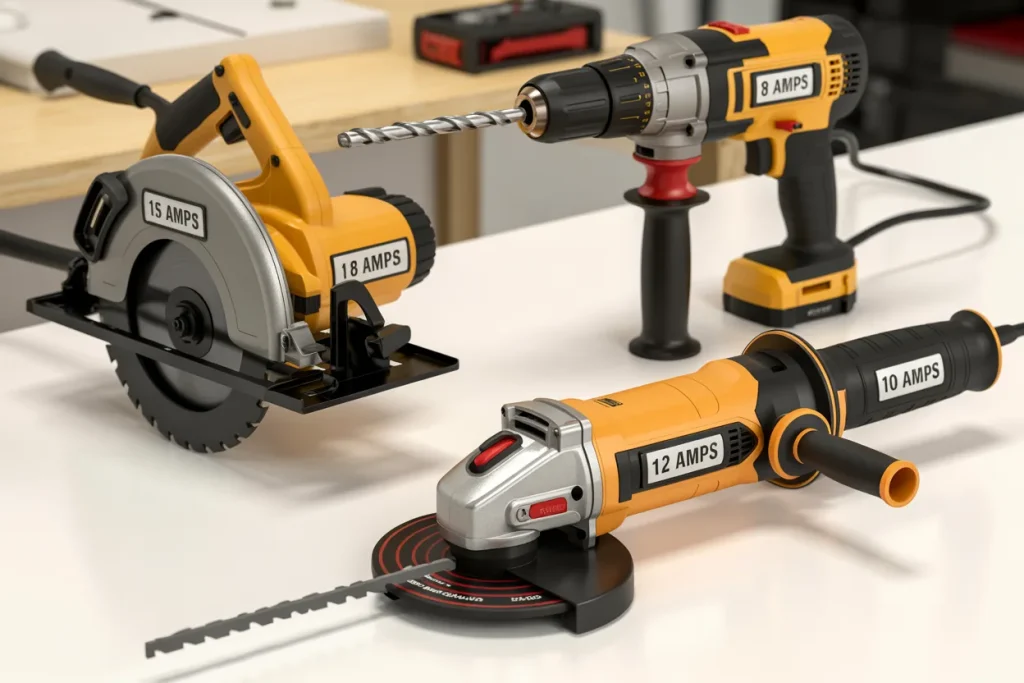
Many tools fall into common ranges. Small hand tools draw less. Larger saws draw more. The list below gives a clear view.
Common Amp Ranges
-
Small drills and drivers: 2 to 6 amps
-
Sanders and jigsaws: 3 to 7 amps
-
Circular saws: 7 to 15 amps
-
Table saws and planers: 10 to 15 amps on 120V
-
Air compressors: 8 to 15 amps on 120V
These ranges answer how many amps does a typical power tool use in daily work. Always check the label since models vary.
Typical Amp Use by Tool
| Tool Type | Common Amp Range |
|---|---|
| Drill driver | 2 to 6 amps |
| Random orbit sander | 3 to 5 amps |
| Circular saw | 7 to 15 amps |
| Table saw | 10 to 15 amps |
| Air compressor | 8 to 15 amps |
Place this table near your shop wall for quick checks.
Corded vs Cordless Tools and Amps
Corded tools list amps on the label. Cordless tools list volts and battery size. For cordless models, amps still matter, but they relate to battery output. Corded tools pull current from the outlet. Cordless tools pull from the battery and convert it for the motor. A 20V battery tool can match a small corded tool for short tasks. For long runs, corded tools give steady output. For quick jobs, cordless tools add ease.
How Voltage Changes Amp Draw
Voltage affects amp draw. At higher voltage, a tool can draw fewer amps for the same work. That is why some shop tools use 240V.
A 120V table saw might draw close to 15 amps. The same saw on 240V may draw about half that current. This helps with start load and breaker trips.
Homes often stick to 120V outlets. Garages and shops may add 240V lines for large tools.
Startup Amps vs Running Amps
Motors draw more current at start. This surge lasts a moment. Breakers allow short surges but trip on long overloads.
A saw rated at 13 amps may pull more at start. Plan circuits with headroom. Avoid running many tools at once on one breaker.
This detail helps answer how many amps does a typical power tool use during real use, not just on paper.
Reading Tool Labels the Right Way
Look for the amp number on the nameplate. It may say “A” or “Amps”. Some labels show input amps. That is the number you need.
Ignore ads that focus on vague strength claims. Trust the label. It reflects tested input draw.
If the label shows watts, divide watts by volts to get amps. For example, 1200 watts at 120 volts equals 10 amps.
Circuit Size and Safe Load
| Breaker Size | Safe Continuous Load |
|---|---|
| 15 amps | 12 amps |
| 20 amps | 16 amps |
Keep tools under the safe load for long use. This keeps wires cool and breakers calm.
Home Circuits and Shared Use
Most rooms use 15 amp circuits. Kitchens and garages often use 20 amp circuits. Know which you have. Do not run a large saw and a vacuum on the same 15 amp circuit. The combined draw can trip the breaker. Plan outlets for your shop. Spread tools across circuits. This simple step prevents downtime.
Extension Cords and Amp Limits
Cords add resistance. Long or thin cords reduce voltage at the tool. This makes motors draw more current. Use short cords. Use thick cords. Match the cord rating to the tool draw. A thin cord can heat up. That risks damage. Check the cord label for amp rating.
Safety Tips for Amp Planning
Safety starts with planning. Keep these points in mind.
-
Match tool amps to breaker size
-
Avoid sharing circuits with heavy loads
-
Use proper cords
-
Keep outlets in good shape
These steps support safe use and steady work.
“Plan the circuit before you press the switch.”
Author: Dana Brooks
Job Site Use vs Home Use
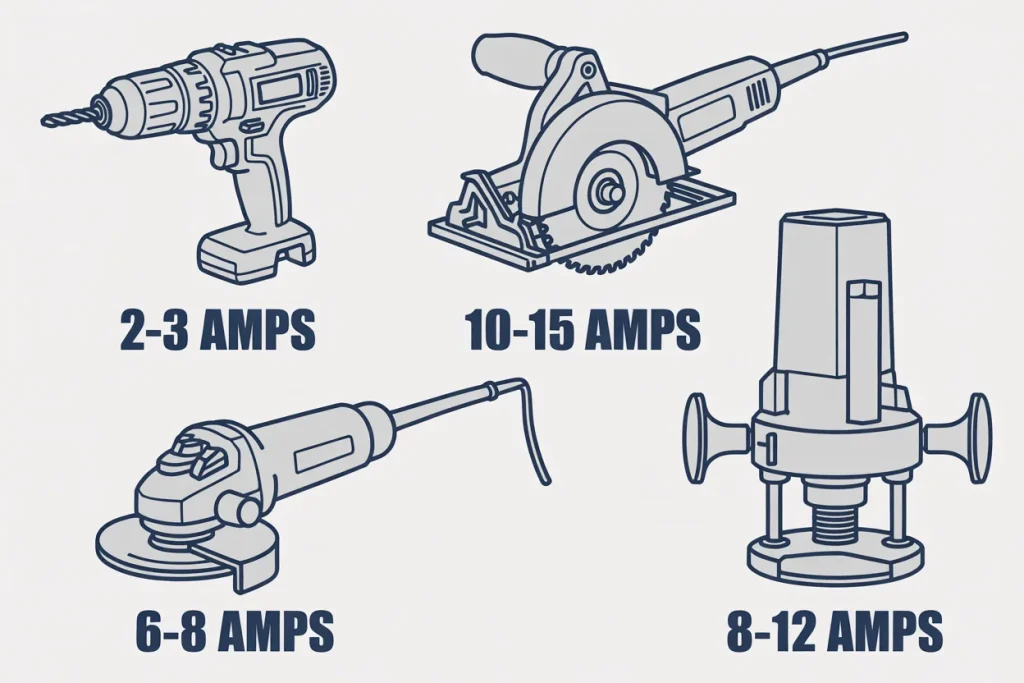
Job sites often run many tools. Crews plan circuits with care. They use split lines and load boxes. At home, the same rules apply. One tool at a time on a small circuit works best. This context helps explain how many amps does a typical power tool use across places.
Why Amp Ratings Vary by Brand
Motors differ in design and size. Two tools that do the same task can draw different amps. Better motor design can reduce draw. Blade size and speed also matter. Always trust the specific label. Do not assume based on looks.
Cold Weather and Amp Draw
Cold thickens grease and stiffens parts. Motors work harder at start. This can raise current for a short time. In cold garages, allow tools to warm up. Start with no load. This reduces stress on circuits.
Dust Collection and Combined Loads
Dust collectors and vacuums draw amps too. Plan for combined use.
A small vacuum may draw 8 amps. Pairing it with a 12 amp saw on one 15 amp circuit will trip the breaker.
Use separate circuits or a tool-triggered vacuum outlet with load control.
Choosing the Right Outlet for Your Tool
Match the plug to the outlet. A tool with a 15 amp plug fits a 15 or 20 amp outlet.
A 20 amp plug needs a 20 amp outlet. Do not change plugs to force a fit. That defeats safety design.
This advice keeps your answer to how many amps does a typical power tool use tied to real outlets.
Battery Chargers and Amps
Chargers draw amps too. Fast chargers draw more for a short time.
Avoid charging many packs on one outlet. Spread them out.
This prevents warm cords and tripped breakers.
Myths About Amps and Tool Size
Some think higher amps mean better results. That is not always true. Efficiency matters.
A well-made tool can do more with less current. Focus on fit for the task and safe draw.
Real Examples From Daily Work
A home user runs a 7 amp saw on a 15 amp circuit with no issue. They avoid using a heater on the same line.
A small shop runs a 12 amp planer on a 20 amp circuit. It starts smooth and runs steady.
These stories show how planning works in practice.
“Simple math keeps work smooth and safe.”
Author: Luis Grant
How to Plan a Small Home Shop
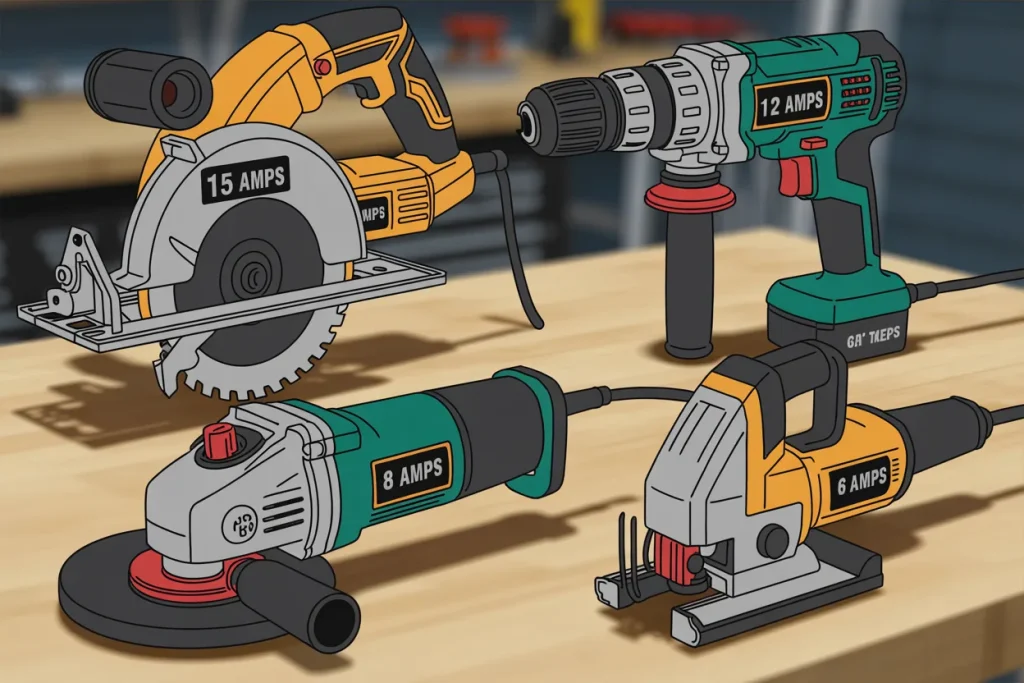
List your tools and their amp ratings. Group them by use.
-
High draw tools on their own circuits
-
Light tools can share
Label outlets. This saves time and prevents mistakes.
Frequently Asked Questions
How many amps does a typical power tool use?
Most hand tools use 2 to 15 amps on 120V. The exact draw depends on type and size.
Can I use a 15 amp tool on a 20 amp outlet?
Yes. The outlet can handle it. The tool draws only what it needs.
Will a higher amp tool work better?
Higher amps mean higher draw, not always better results. Design and blades matter too.
Do cordless tools use amps?
Yes, from the battery. The label shows volts and battery size instead of input amps.
Why does my breaker trip at startup?
Motors draw extra current at start. Shared loads or thin cords can cause trips.
Conclusion
Knowing how many amps does a typical power tool use helps you work with calm and care. It keeps circuits safe, tools happy, and projects on track. Read labels. Plan circuits. Use proper cords. Spread loads. These steps take little time and pay off every day. With this guide, you can choose outlets with confidence and avoid surprises. Safe planning leads to steady work and better results.
Related posts

If you are wondering Which kitchen tools are essential for cooking , the answer includes nonstick pans, silicone utensils, stainless steel bowls, and dishwasher safe cookware…
By bestoolsinfo

If you are wondering How to Choose the Right Vegetable Chopper, this guide explains blade types, size, material, safety features, and cleaning ease so you can…
By bestoolsinfo

Looking for the Best Portable Dishwasher 2026? This detailed guide reviews top models, features, pros and cons, pricing, and expert tips to help you choose the…
By bestoolsinfo