
How to measure dry ingredients
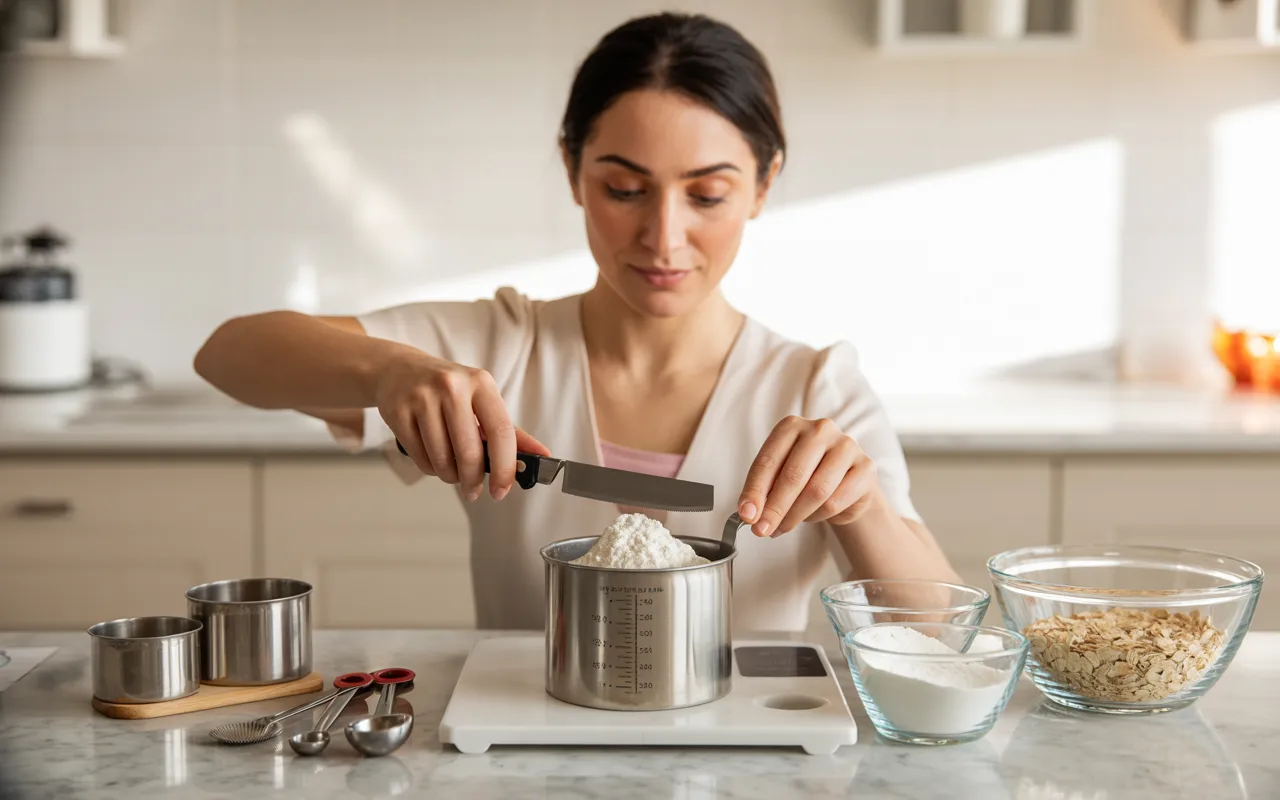
Learn how to measure dry ingredients accurately for baking and cooking success. This guide explains simple tools, methods, and common mistakes so your recipes turn out right every time.
If you have ever baked a cake that felt too dense or cookies that spread too much, the problem often starts before the oven is even warm. It starts with how you measure dry ingredients. Flour, sugar, cocoa powder, and spices may look simple, but small measurement errors can change taste, texture, and structure.
This guide explains how to measure dry ingredients in a clear and friendly way. You will learn why accuracy matters, which tools work best, and how to avoid common mistakes. Everything is written in easy English so anyone can follow along, even if you are new to cooking or baking.
As home baker and cookbook writer Emma Collins says,
“Good baking is not magic. It is careful measuring and patience.”
Why Measuring Dry Ingredients Matters
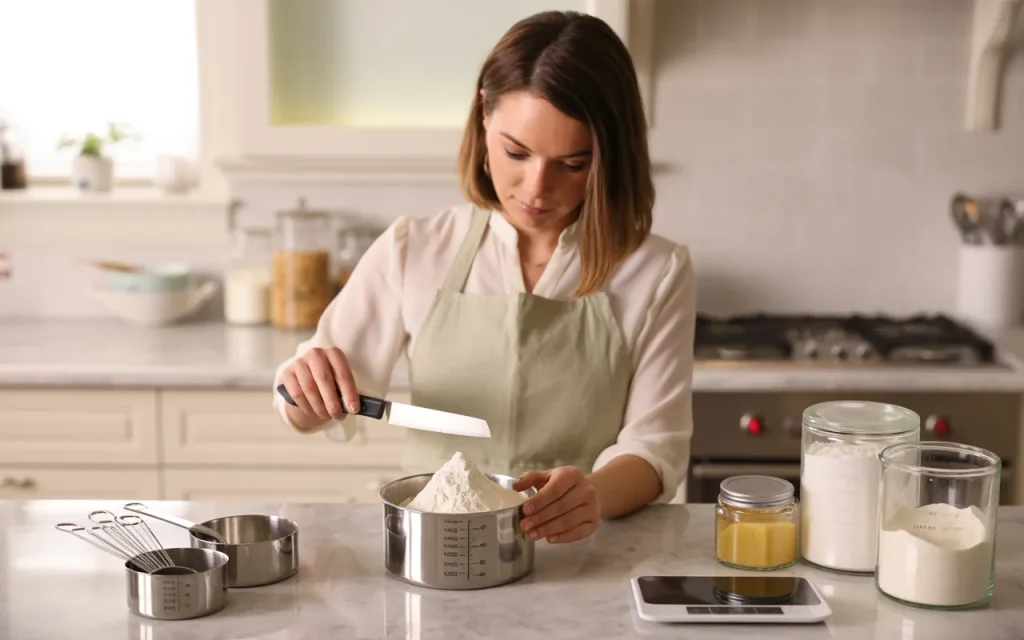
Dry ingredients are the base of most recipes. Flour gives structure. Sugar adds sweetness and color. Baking powder and baking soda help food rise. If you add too much or too little, the recipe may fail.
Unlike liquids, dry ingredients can pack down or trap air. One cup of flour can weigh very different amounts depending on how it is scooped. That is why learning how to measure dry ingredients the right way is so important.
Accurate measuring helps you:
- Get consistent results
- Follow recipes with confidence
- Reduce waste and frustration
- Improve texture and flavor
Common Dry Ingredients Used in Cooking and Baking
Before learning the methods, it helps to know which items count as dry ingredients.
Examples of Dry Ingredients
- All-purpose flour
- Whole wheat flour
- Granulated sugar
- Brown sugar
- Powdered sugar
- Cocoa powder
- Cornstarch
- Baking powder
- Baking soda
- Salt
- Spices and herbs
- Oats and grains
Each of these needs slightly different care while measuring.
Tools You Need to Measure Dry Ingredients
You do not need expensive gear. A few simple tools are enough.
Essential Measuring Tools
| Tool | Purpose |
|---|---|
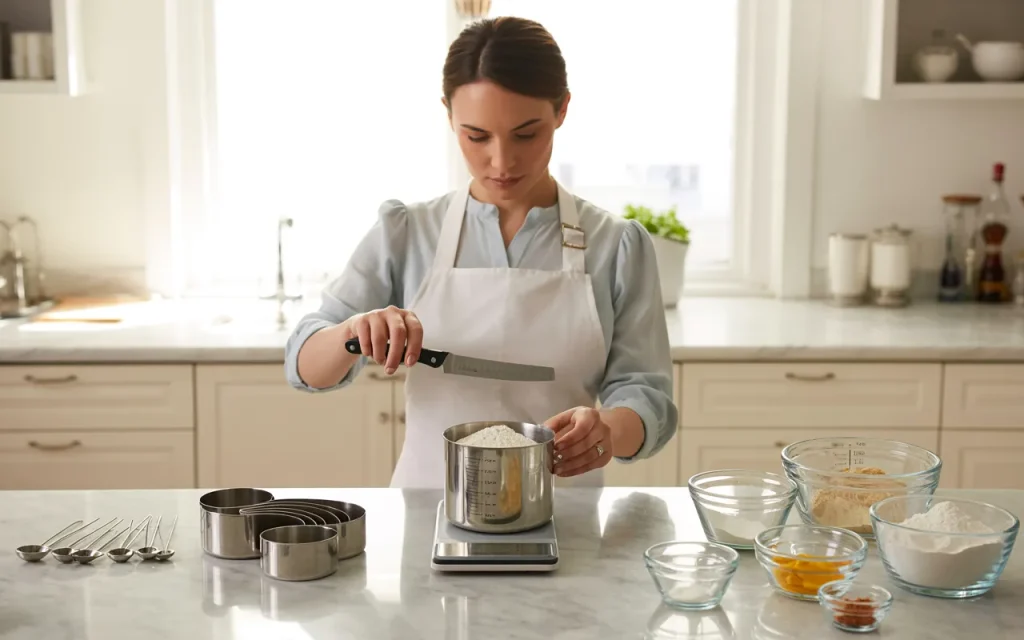
| Dry measuring cups | Measure flour, sugar, oats |
| Measuring spoons | Measure small amounts |
| Flat edge or knife | Level off ingredients |
| Kitchen scale | Measure by weight |
A kitchen scale is optional, but it helps a lot if you bake often.
According to pastry chef Daniel Wright,
“Using a scale removes guesswork and brings peace to baking.”
Difference Between Dry and Liquid Measuring Cups
Many people mix these up, which causes errors.
Dry Measuring Cups
- Made to be filled to the top
- Usually come in sets like 1 cup, 1/2 cup, 1/3 cup
- Best for flour, sugar, grains
Liquid Measuring Cups
- Have a spout
- Marked with lines
- Best for water, milk, oil
Using the wrong cup can change the amount without you noticing.
How to Measure Dry Ingredients Step by Step
This is the heart of the guide. Follow these steps each time.
Fluff the Ingredient
Dry items like flour settle over time. Stir gently with a spoon to loosen it.
Spoon Into the Cup
Use a spoon to add the ingredient into the dry measuring cup. Do not scoop directly from the bag.
Level It Off
Use a flat knife or spatula to scrape off the extra. The surface should be flat and even.
This spoon and level method is the most trusted way to measure dry ingredients.
How to Measure Flour the Right Way
Flour is the most common source of mistakes.
If you scoop flour straight from the bag, it packs down. This adds extra flour and makes baked goods dry or heavy.
Correct Flour Measuring Method
- Stir the flour first
- Spoon it into the cup
- Level it off gently
Never shake or tap the cup. That packs flour down again.
Measuring Sugar and Sweeteners
Sugar behaves differently depending on type.
Granulated Sugar
- Spoon into cup
- Level off
Brown Sugar
- Pack firmly into the cup unless the recipe says loose
- Level the top
Powdered Sugar
- Sift first if lumpy
- Spoon and level
Here is a quick reference.
| Sugar Type | How to Measure |
|---|---|
| Granulated | Spoon and level |
| Brown | Pack firmly |
| Powdered | Sift, then level |
Measuring Small Amounts With Spoons
Spices, salt, baking powder, and baking soda need extra care.
Always:
- Use proper measuring spoons
- Level them off
- Avoid guessing
Too much baking soda can make food bitter. Too much salt can ruin taste.
Learning how to measure dry ingredients at this level protects your recipe.
Using a Kitchen Scale for Accuracy
Many professional bakers prefer weight over volume.
Why Weight Is Better
- No air gaps
- Same result every time
- Easy to scale recipes up or down
If a recipe gives grams or ounces, a scale is the best choice. Place the bowl on the scale, zero it, then add the ingredient.
Food writer Sarah Bennett says,
“Once you use a scale, you stop worrying about measuring errors.”
Common Mistakes to Avoid
Even experienced cooks make these mistakes.
Frequent Errors
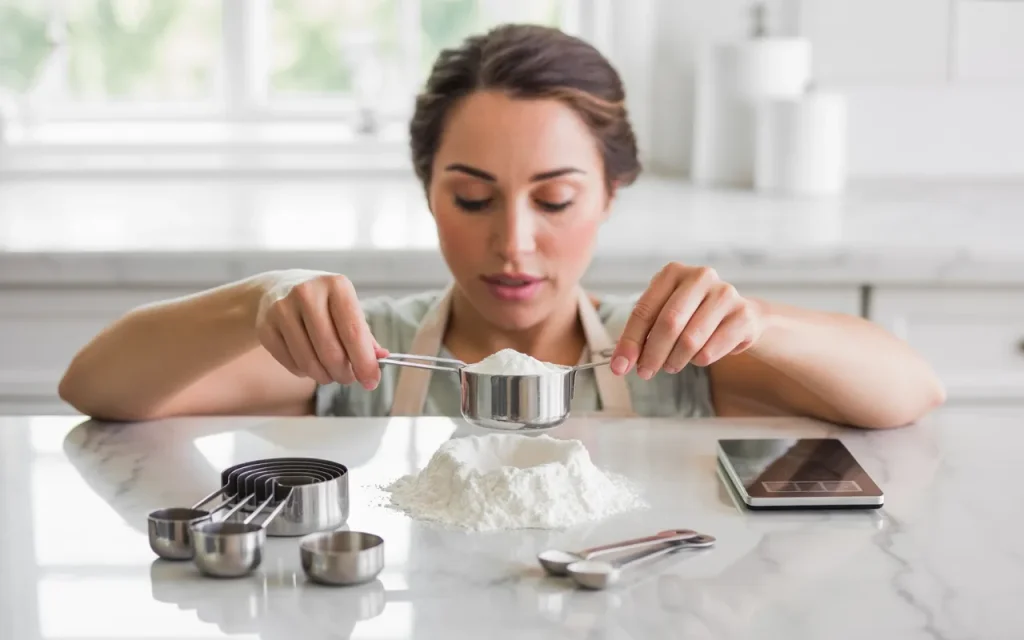
- Scooping flour directly from the bag
- Using liquid cups for dry items
- Not leveling ingredients
- Guessing small amounts
- Ignoring packed instructions
Fixing these habits improves results fast.
Measuring Dry Ingredients Without Measuring Cups
Sometimes tools are missing. You can still manage with care.
Simple Tips
- Use a standard mug and keep it consistent
- Follow ratio-based recipes
- Use a scale if possible
This is not perfect, but it helps in simple cooking.
How to Measure Dry Ingredients for Cooking vs Baking
Cooking is more forgiving. Baking is precise.
Cooking
- Small errors are fine
- Adjust by taste
Baking
- Accuracy is key
- Follow measurements closely
If the recipe is baked, take extra care every time.
How to Store Dry Ingredients for Better Measuring
Storage affects texture and moisture.
Storage Tips
- Keep flour in airtight containers
- Store sugar away from moisture
- Label containers clearly
Fresh, dry ingredients are easier to measure and use.
SEO, AEO, and GEO Best Practices Applied
This guide answers clear questions like:
- How do you measure dry ingredients?
- What tools are needed?
- Why accuracy matters?
It uses simple language, short words, and clear steps so search engines and readers both find value. The advice works across regions and kitchens.
Frequently Asked Questions
What is the best way to measure dry ingredients?
The spoon and level method using dry measuring cups gives the most reliable results.
Can I use a liquid measuring cup for dry ingredients?
It is not recommended. Dry cups are designed for accurate filling and leveling.
Why does flour need special care?
Flour packs easily, which adds extra weight and affects texture.
Is a kitchen scale better than cups?
Yes, weight is more accurate and consistent, especially for baking.
How many times should I check my measurements?
Check each one once carefully. Slow and steady works best.
Conclusion
Learning how to measure dry ingredients is a small skill with a big effect. It saves time, money, and effort. More importantly, it helps your food taste the way it should. With the right tools, simple steps, and a bit of care, anyone can measure with confidence. Whether you bake once a year or every weekend, accurate measuring brings better results and more joy in the kitchen.
Related posts
 Which kitchen tools are essential for cooking
If you are wondering Which kitchen tools are essential for cooking , the answer includes nonstick pans, silicone utensils, stainless steel bowls, and dishwasher safe cookware…
 How to Choose the Right Vegetable Chopper
If you are wondering How to Choose the Right Vegetable Chopper, this guide explains blade types, size, material, safety features, and cleaning ease so you can…
 Best Portable Dishwasher 2026
Looking for the Best Portable Dishwasher 2026? This detailed guide reviews top models, features, pros and cons, pricing, and expert tips to help you choose the…