
How to maintain wooden kitchen tools

Learn how to maintain wooden kitchen tools with simple daily care, safe cleaning, oiling steps, and storage tips that keep them clean, strong, and long lasting.
Wooden kitchen tools feel warm and calm in the hand. They do not scratch pans. They do not react with food. They last for years if you treat them well. Many people buy wooden spoons, spatulas, boards, and rolling pins, yet they lose them early due to poor care. I learned this the hard way after cracking my first wooden spoon by soaking it overnight.
This guide explains How to maintain wooden kitchen tools in a clear and friendly way. You will find easy steps, real care tips, and honest advice based on daily kitchen use. No fancy words. No sales talk. Just help you can trust.
Wood tools need care, but that care is simple. A few small habits can keep them smooth, clean, and safe for food. Let us go step by step so you feel confident using them every day.
“Wood lasts long when you treat it like a living thing, not a plastic one.”
Author: Lina Matthews

Why Wooden Kitchen Tools Need Care
Wood is natural. It moves with heat and water. It can dry out. It can crack. It can hold smells if ignored. These facts do not mean wood is hard to keep. They mean it needs respect.
Plastic tools melt. Metal tools scratch. Wood sits in between. It stays kind to your pans and food. With care, it stays clean and strong.
What Happens Without Care
If you skip care, wood can turn rough. Small cracks may form. Food bits can hide inside. Smells can stay. In rare cases, mold may grow. These issues come from water and heat.
Benefits of Good Care
Good care keeps tools smooth. It stops splits. It keeps food safe. It also saves money since you replace tools less often.
Types of Wooden Kitchen Tools You Might Own
Different tools face different stress. A spoon sees heat. A board sees cuts. A rolling pin sees pressure.
Common Wooden Tools
| Tool Name | Main Use | Care Level |
|---|---|---|
| Wooden spoon | Stirring hot food | Medium |
| Spatula | Flipping and mixing | Medium |
| Cutting board | Chopping food | High |
| Rolling pin | Dough work | Low to medium |
| Salad servers | Cold food | Low |
Each tool needs similar care, but boards need extra love.
Daily Cleaning Basics
Daily care is the heart of How to maintain wooden kitchen tools. Most damage starts during cleaning.
Wash Right After Use
Wash tools soon after use. Use warm water. Add mild soap. Scrub gently with a soft sponge. This removes food before it sticks.
Never Soak in Water
Soaking pulls water deep into wood. This leads to swelling and cracks. A quick wash is enough.
Skip the Dishwasher
Dishwashers use high heat and long water cycles. This dries wood fast and causes warping. Always wash by hand.
“Water is fine for wood, but time is the enemy.”
Author: James Holloway
Drying Wooden Tools the Right Way
Drying matters as much as washing.
Air Dry Fully
After washing, wipe tools with a clean towel. Then place them in open air. Let all sides dry.
Stand or Lay Flat
Stand spoons in a jar or lay boards flat. Avoid leaning boards against walls while wet. This traps moisture.
Avoid Heat Sources
Keep wood away from stoves, ovens, and direct sun. Fast heat dries wood unevenly.
Oiling Wooden Kitchen Tools
Oiling feeds wood. It keeps it smooth and sealed.
This step plays a key role in How to maintain wooden kitchen tools for years.
Why Oil Matters
Oil fills tiny gaps in wood. It blocks water. It keeps tools from drying out.
Best Oils to Use
| Oil Type | Safe for Food | Notes |
|---|---|---|
| Mineral oil | Yes | Most common |
| Walnut oil | Yes | Avoid if nut allergy |
| Beeswax blend | Yes | Adds shine |
Avoid cooking oils like olive or vegetable oil. They turn sticky and smell over time.
How Often to Oil
Oil new tools once a week for the first month. After that, oil once every month or when wood looks dry.
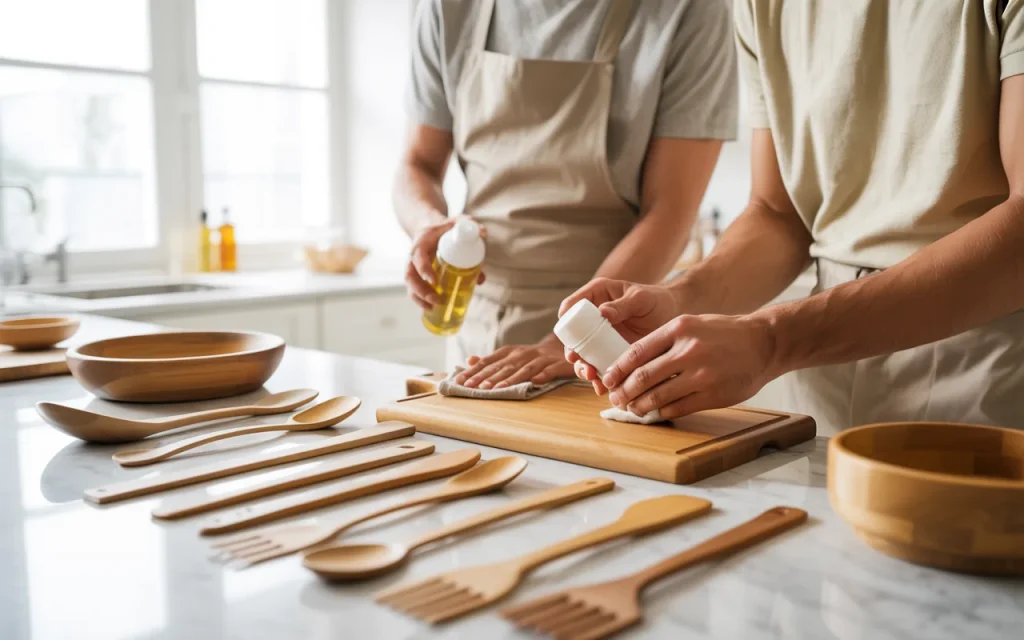
How to Oil Step by Step
Clean and dry the tool. Add a small amount of oil to a cloth. Rub along the grain. Let it sit for a few hours. Wipe off extra oil.
Deep Cleaning When Tools Smell
Sometimes wood holds smells from garlic or fish.
Simple Smell Removal
Sprinkle salt on the tool. Rub with half a lemon. Rinse and dry well. This freshens wood.
Baking Soda Method
Make a paste with baking soda and water. Rub gently. Rinse and dry. These steps help keep tools fresh and safe.
Storing Wooden Kitchen Tools Safely
Storage affects lifespan more than most people think.
Keep Tools Dry
Store tools only after full drying. Moist storage leads to mold.
Give Them Air
Use open holders. Avoid sealed boxes. Wood needs air.
Board Storage Tips
Store boards flat or on their side with space around them. Do not stack wet boards.
Storage habits support How to maintain wooden kitchen tools without extra work.
Signs Your Wooden Tools Need Care
Wood speaks through its look and feel.
Dry and Pale Look
This means oil is needed.
Rough Texture
Light sanding with fine grit paper helps. Oil after sanding.
Cracks or Splits
Small cracks may close with oil. Deep cracks mean the tool may need replacement.
“Your tools show their needs if you slow down and look.”
Author: Maria Chen

Food Safety and Wooden Tools
Many worry about germs in wood. Research shows wood can be safe with proper care.
Why Wood Can Be Safe
Wood has natural fibers that trap and dry bacteria. Dry bacteria die faster.
Keep Tools Clean
Wash after use. Dry well. Oil often. These steps keep food safe.
This topic often comes up in How to maintain wooden kitchen tools discussions, and the answer is simple. Clean habits matter.
Mistakes to Avoid
Small mistakes cause big damage.
Common Errors
- Soaking tools in sinks
- Using harsh cleaners
- Drying near heat
- Skipping oiling
- Storing while wet
Avoiding these keeps tools strong.
Caring for Cutting Boards
Boards face knives and moisture daily.
Board Specific Tips
Clean after each use. Use separate boards for meat and produce if possible. Oil more often than spoons. Flip boards often to wear them evenly. This section adds depth to How to maintain wooden kitchen tools for serious home cooks.
Seasonal Care Tips
Weather affects wood.
Dry Weather
Oil more often. Indoor heat dries wood fast.
Humid Weather
Dry tools well. Give extra air during storage. Adjust care with seasons to avoid damage.
Eco Friendly Benefits of Wooden Tools
Wood tools last long. They reduce plastic waste. They feel better to use. Good care means fewer replacements. This helps your budget and the planet.
Many people ask How to maintain wooden kitchen tools because they want a more natural kitchen.

Frequently Asked Questions
How often should I oil wooden kitchen tools?
Oil once a month or when tools look dry.
Can I use vinegar to clean wood?
Yes, but rinse well and dry fast. Do not use often.
Is sanding safe for wooden tools?
Yes. Use fine grit paper. Oil after sanding.
Why does my spoon smell?
Food oils soaked in. Use lemon and salt to clean.
Can cracked tools be fixed?
Small cracks may improve with oil. Deep cracks mean replacement.
Conclusion
Wooden kitchen tools add comfort and calm to cooking. They ask for care, but that care is simple and quick. Wash gently. Dry fully. Oil now and then. Store with air. These habits keep tools safe, smooth, and ready for daily meals.
This guide shared real steps based on experience and trust. Follow them and your tools will stay with you for years. If you remember one thing from this guide on How to maintain wooden kitchen tools, remember this. Treat wood with patience and it will serve you well every day.
Related posts
 Which kitchen tools are essential for cooking
If you are wondering Which kitchen tools are essential for cooking , the answer includes nonstick pans, silicone utensils, stainless steel bowls, and dishwasher safe cookware…
 How to Choose the Right Vegetable Chopper
If you are wondering How to Choose the Right Vegetable Chopper, this guide explains blade types, size, material, safety features, and cleaning ease so you can…
 Best Portable Dishwasher 2026
Looking for the Best Portable Dishwasher 2026? This detailed guide reviews top models, features, pros and cons, pricing, and expert tips to help you choose the…